
Keeping Pets Safe in Hot Weather: Essential Summer Advice

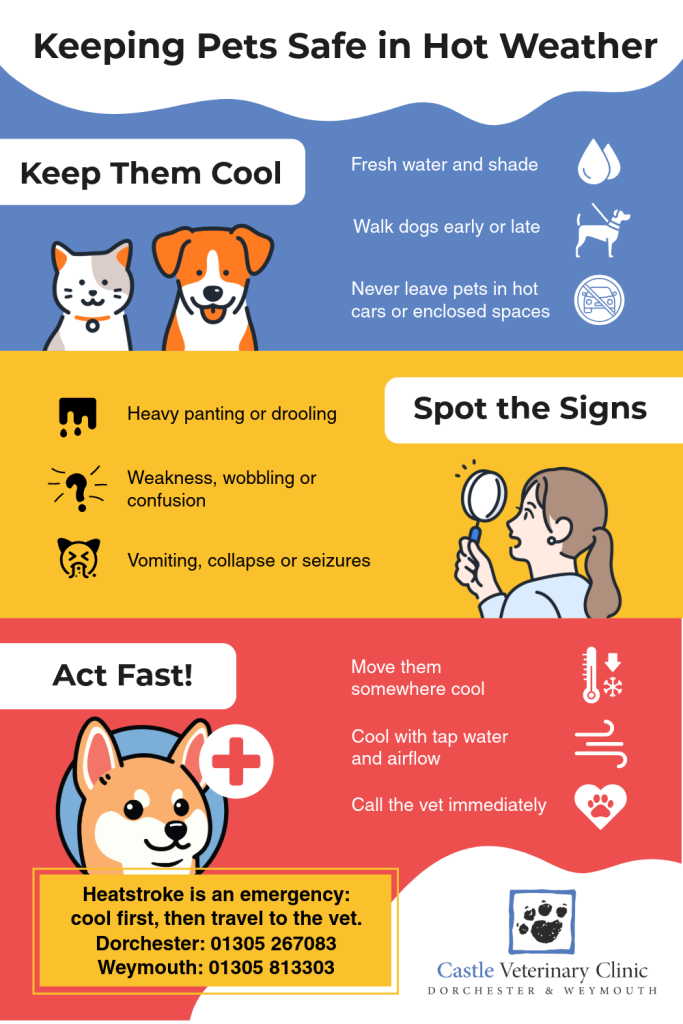
The infographic above covers the essentials at a glance. Below, we take a closer look at why hot weather can be dangerous, which pets are most vulnerable, how to adapt everyday routines and what to do if you suspect heatstroke.

Warm weather can be lovely, but even a mild-looking UK summer day can become uncomfortable or dangerous for pets. Dogs, cats, rabbits and small pets do not manage heat in the same way we do, and enclosed spaces can become dangerously hot far more quickly than many owners expect.

A few changes to your pet’s routine can greatly reduce the risk of overheating. It is also important to recognise the early signs of heat-related illness and know what to do if your pet begins to struggle.

Why Hot Weather Can Be Dangerous for Pets

Pets have limited ways to lose excess body heat. Dogs mainly cool themselves by panting, while cats may seek cooler surfaces, groom more and become less active. Rabbits and many small pets are especially vulnerable because they cope poorly with high temperatures and can quickly overheat in a warm hutch, cage, shed or room.

Heatstroke happens when a pet’s body temperature rises to a dangerous level and their normal cooling mechanisms can no longer cope. It can damage the brain and other organs, and it can be fatal.

Heat-related illness is not only linked to hot cars. Exercise is a major trigger in dogs, and cases can occur outside obvious heatwaves, particularly when pets are active in warm, humid or poorly ventilated conditions.

Which Pets Are Most at Risk?

Any pet can overheat, but some need extra care during warmer weather. Higher-risk pets include:

  • Flat-faced dogs and cats, such as Bulldogs, Pugs, French Bulldogs and Persians
  • Older pets and very young animals
  • Pets that are overweight
  • Pets with heart disease, breathing problems or reduced mobility
  • Dogs with thick or double coats
  • Highly active dogs that may continue playing or running despite becoming too hot
  • Rabbits, guinea pigs and other small pets housed in direct sunlight or poorly ventilated spaces

These pets may need shorter periods outside, more frequent rest and closer monitoring, even when the weather does not feel extremely hot to you.
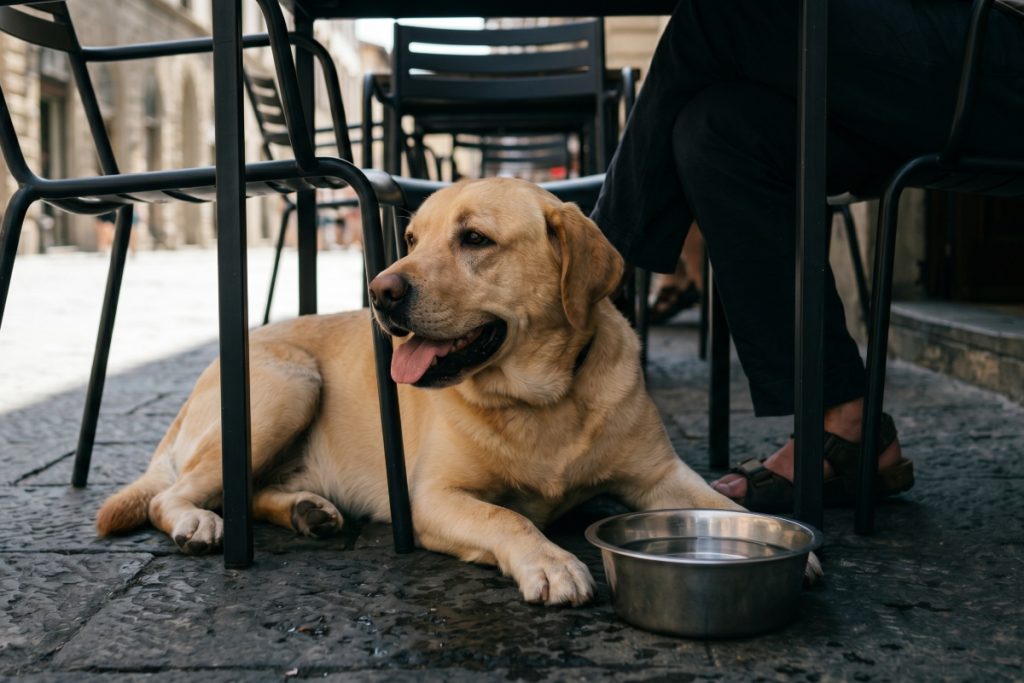
Simple Ways to Keep Pets Cool

Provide Water, Shade and Ventilation

Make sure your pet always has access to fresh drinking water. On warmer days, place extra bowls around the home and garden in case one is knocked over or becomes warm.

Keep beds, cages and resting areas away from direct sunlight and choose the coolest, best-ventilated part of the home. Closing curtains or blinds on sunny windows can help prevent rooms from heating up.

Fans may improve airflow, but pets should always be able to move away from them. Cooling mats, chilled ceramic tiles or a cool, damp surface can also provide relief.

Frozen water bottles wrapped in a towel can be placed beside, rather than directly against, a rabbit or guinea pig’s resting area.

Adjust Dog Walks and Exercise

Walk dogs during the coolest parts of the day, usually early in the morning or later in the evening. Keep walks shorter and gentler when it is warm, and choose shaded routes where possible.

Missing a walk or replacing it with calm indoor enrichment is safer than exercising in unsuitable heat. Food puzzles, scent games and short training sessions can provide mental stimulation without strenuous activity.

Pavements and artificial surfaces can become much hotter than the surrounding air and may burn paw pads. Check the ground before walking and avoid it when it feels uncomfortably hot to your hand.

Remember that energetic dogs may not choose to stop by themselves, so owners need to set the limit before their pet becomes exhausted or overheated.

Never Leave a Pet in a Hot Enclosed Space

Never leave a pet in a parked car on a warm day, even with the windows partly open or for only a few minutes. Cars can heat up rapidly and become dangerously hot.

Conservatories, caravans, sheds, greenhouses and poorly ventilated rooms can also become unsafe. Always check the temperature and ventilation before leaving a pet in an enclosed area.

Plan journeys carefully, use air conditioning where available and take regular breaks with access to fresh water.
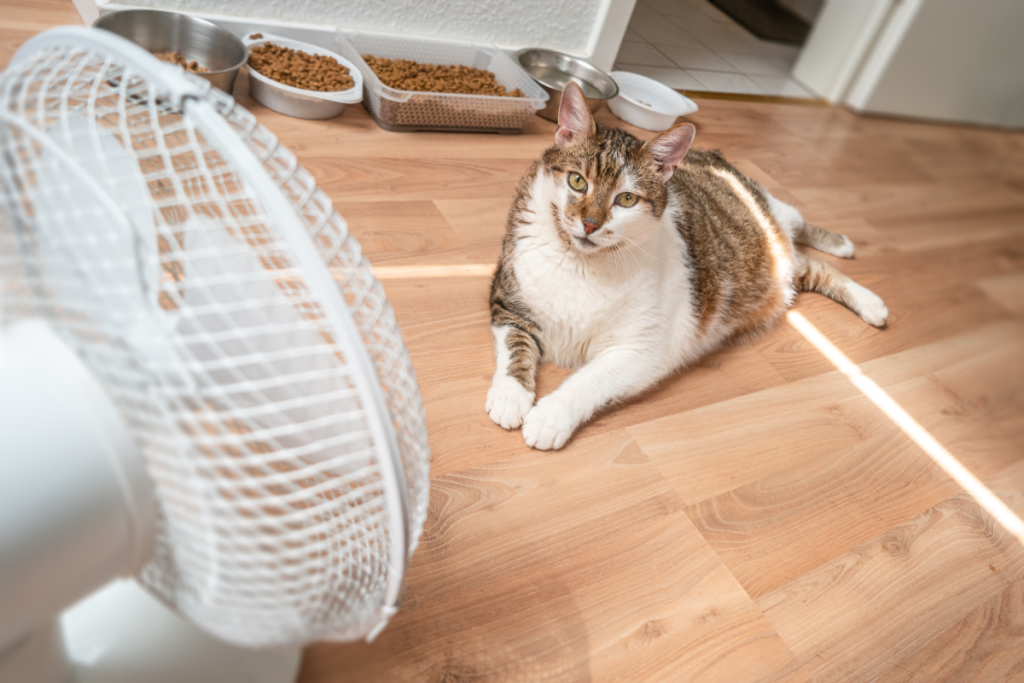
Hot Weather Care for Cats

Cats often manage warm days by sleeping more and finding cooler places, but they still need support from their owners.

Provide several water bowls around the home and keep indoor areas ventilated. Some cats prefer running water, so a pet drinking fountain may encourage them to drink more.

Check sheds, garages, greenhouses and vehicles before closing doors, as cats may enter these spaces to explore or find somewhere quiet to sleep.

Pale or thinly furred cats can also be vulnerable to sunburn, particularly on the ear tips and nose. Ask your vet about a suitable pet-safe sun protection product rather than using human sunscreen, which may contain ingredients that are harmful if licked.

Panting or open-mouth breathing is unusual in cats and should be treated as a warning sign. Move your cat somewhere cool and contact your vet promptly.
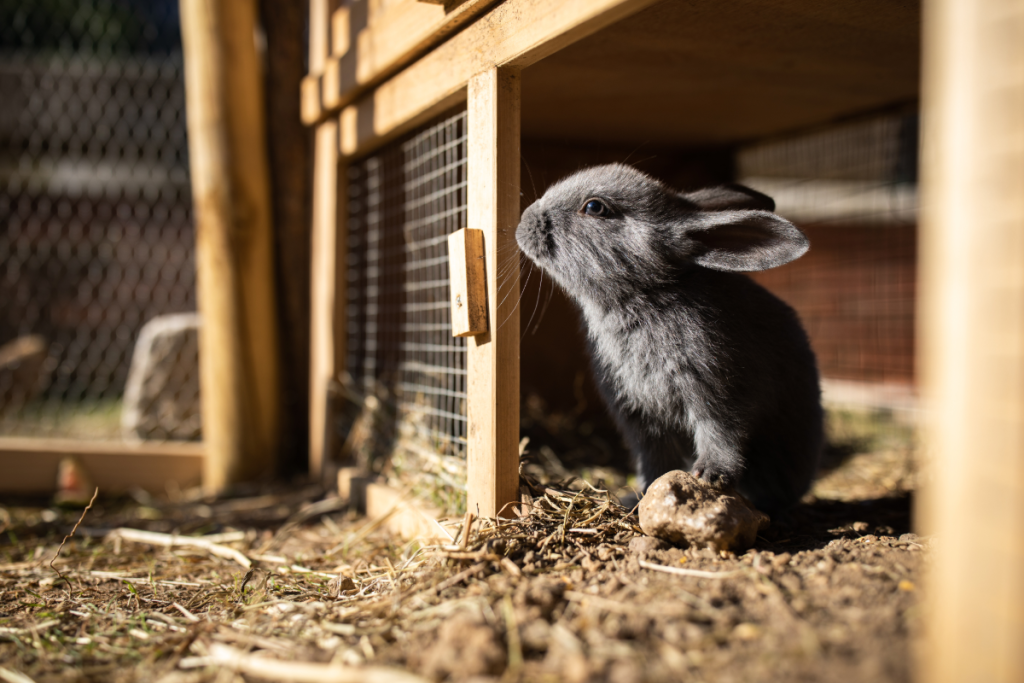
Hot Weather Care for Rabbits and Small Pets

Rabbits, guinea pigs and other small pets can overheat quickly, particularly when housed outdoors.

Move outdoor accommodation into permanent shade and remember that the position of the sun changes throughout the day. An area that is shaded in the morning may be in full sun by the afternoon.

Hutches and runs need good ventilation while still keeping pets secure from predators. Indoors, move cages away from sunny windows, radiators and warm electrical appliances.

Provide cool resting surfaces and consider placing a frozen water bottle wrapped in a towel beside their sleeping area. Replace it as it warms and make sure your pet can move away from it.

Check rabbits at least twice daily during warmer weather. Heat also increases the risk of flystrike, so keep bedding clean and regularly check the fur around your rabbit’s bottom.

Contact your vet promptly if you notice:

  • Wet, dirty or matted fur around the bottom
  • Wounds or sore skin
  • Flies or maggots
  • Reduced appetite
  • Fewer or smaller droppings
  • Weakness, rapid breathing or unusual quietness

A rabbit that has stopped eating or producing droppings needs urgent veterinary advice.

Signs Your Pet May Be Overheating

Early signs of overheating can progress quickly, so it is important to act as soon as something appears wrong.

Warning signs may include:

  • Heavy, rapid or unusual panting
  • Excessive drooling or a very wet mouth
  • Restlessness or distress
  • Repeatedly seeking shade or cool surfaces
  • Bright red or unusually pale gums
  • Weakness, drowsiness or poor coordination
  • Vomiting or diarrhoea
  • Confusion or reduced responsiveness
  • Collapse or seizures

Cats may pant or breathe with an open mouth, which is always concerning.

Rabbits may breathe rapidly, have hot or reddened ears, appear weak, lie stretched out or become unusually quiet and unresponsive.

What to Do if You Think Your Pet Has Heatstroke

Heatstroke is a veterinary emergency. Begin cooling your pet immediately and contact the practice for urgent advice.

  1. Stop all activity. Move your pet into shade or a cool, well-ventilated area.
  2. Apply cool tap water to the body. The water does not need to be ice-cold. It simply needs to be cooler than your pet.
  3. Encourage airflow. Use a fan, air conditioning or natural airflow to support evaporation.
  4. Offer small amounts of water. Only do this if your pet is alert and able to drink normally. Do not force water into their mouth.
  5. Call the vet immediately. Arrange an urgent assessment and continue cooling your pet while preparing for transport.

Do not wrap an overheating pet in wet towels. Towels can quickly become warm and may trap heat against the body.

Do not delay veterinary care because your pet appears to improve. Internal complications can develop even after their breathing settles or their body temperature begins to fall.

A Little Preparation Makes a Big Difference

Check the weather forecast before walks, journeys or days out, and make a cooler alternative plan when necessary.

Keep fresh water available, create shaded resting areas and pay extra attention to pets with known risk factors. Make sure anyone caring for your pet also understands their routine and knows the warning signs of overheating.

Hot weather safety is not about stopping pets from enjoying summer. It is about adapting their routine so they can enjoy it safely and comfortably.

Worried About Your Pet in the Heat?

If your pet is struggling to breathe, appears weak, collapses or shows other signs of heatstroke, contact the practice immediately: Dorchester (Poundbury): 01305 267083 / Weymouth: 01305 813303

For non-urgent summer care advice, speak to our team. You can also ask us how the practice health plan can help you stay on top of routine preventative care throughout the year.

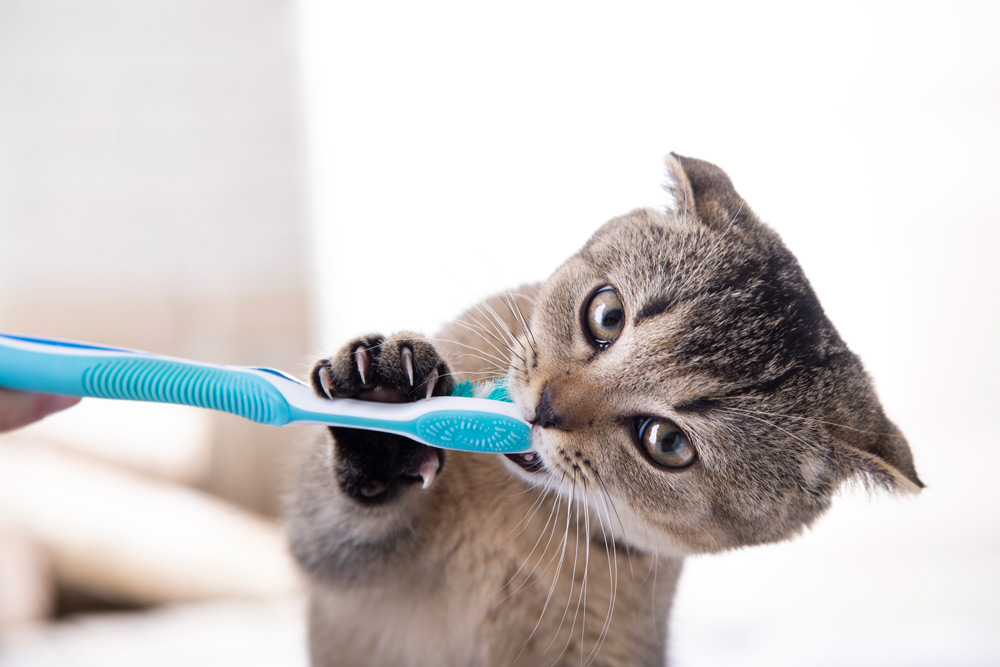
How Do I Know if My Pet Has Dental Problems?

How Do I Know if My Pet Has Dental Problems?
Why Dental Health Matters for Your Pet 

Good dental health is essential for your pet’s overall well-being. Dental disease is common in cats, dogs, and rabbits, and if left untreated, it can cause pain, infections, and even impact other organs such as the heart, liver, and kidneys. Recognising the signs of dental problems early can help prevent serious health issues and keep your pet happy and healthy.

pet dental health
Signs Your Pet May Have Dental Problems 
  • Bad Breath (Halitosis): Persistent foul-smelling breath can indicate dental disease, such as gum infections or tooth decay. 
  • Difficulty Eating or Chewing: If your pet is reluctant to eat, chews on one side, or avoids hard food, it may be experiencing dental pain. 
  • Excessive Drooling: Thick saliva or saliva with blood may be a sign of oral discomfort or infection. 
  • Swollen or Bleeding Gums: Red, swollen, or bleeding gums can indicate gingivitis or severe periodontal disease. 
  • Loose or Broken Teeth: Wobbly or visibly damaged teeth may indicate advanced dental disease. 
  • Pawing at the Mouth or Face: Pets may paw at their mouth or rub their face due to discomfort. 
  • Weight Loss or Behavioural Changes: Avoiding food, losing weight, or becoming withdrawn may indicate dental pain. 
  • Facial Swelling (Rabbits & Some Dogs): Swelling around the jaw or face may indicate an abscess or infection. 
How to Prevent Dental Problems in Pets 
For Cats and Dogs: 
  • Brush Their Teeth Regularly: Use a pet-specific toothbrush and toothpaste to prevent gum disease. 
  • Provide Dental Treats & Chews: Helps reduce plaque and tartar build-up between brushings. 
  • Schedule Regular Vet Check-Ups: Annual exams catch issues early before they become serious. 
  • Monitor Eating Habits: Any changes in eating behaviour should be noted and discussed with your vet. 
Rabbit dental health
For Rabbits: 
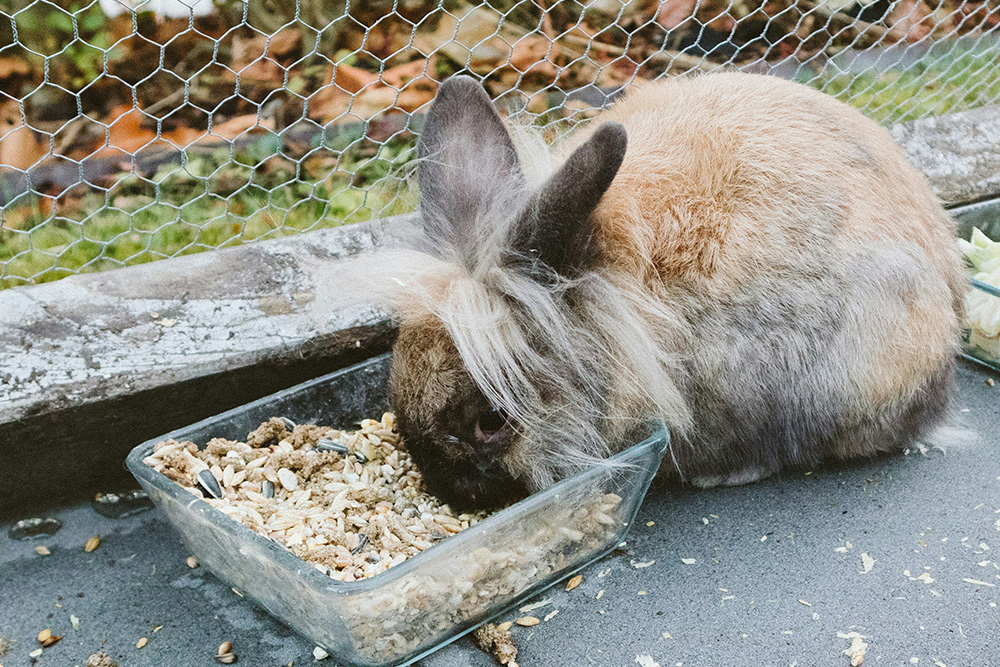
  • Feed a High-Fibre Diet: Hay should make up most of their diet to wear down their continuously growing teeth. 
  • Check for Overgrown Teeth: Misaligned or overgrown teeth require veterinary attention. 
  • Look for Drooling & Weight Loss: Early warning signs of dental problems. 
Top Tips for Keeping Your Pet’s Teeth Healthy: 

  Brush regularly with pet-safe toothpaste 
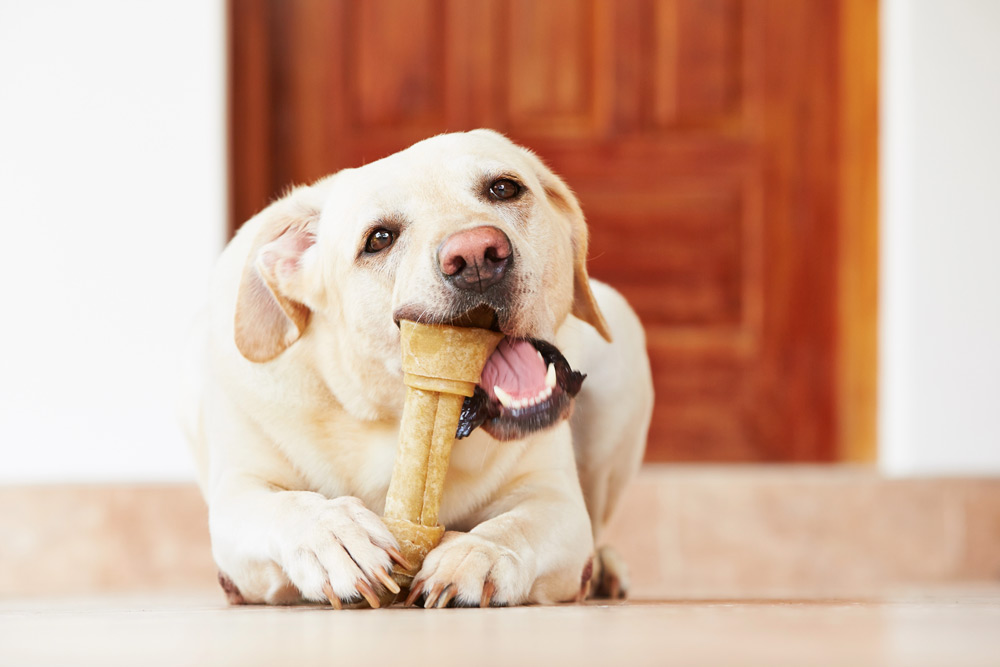
  Provide appropriate dental chews and a species-appropriate diet 
  Schedule regular dental check-ups 
  Watch for signs of dental problems like bad breath or difficulty eating

How can our practice help?

We provide comprehensive dental care for cats, dogs, and rabbits, including professional cleanings, extractions, and preventative advice. The Castle Club includes regular check-ups and dental procedure discounts to help keep your pet’s teeth in top condition.

Pets and Fireworks | Top Tips To Help Pets Scared of Fireworks

Pets and Fireworks – Why Noise Annoys, and How Fears Can Turn Into Life-Limiting Phobias

Around 60% of our furry friends become agitated and afraid whilst fireworks are going off, so aside from being unpleasant for both them and your family, it’s little surprise that statistically more pets are reported missing on bonfire night than any other night during the year.

If the fear isn’t dealt with, it can quickly turn into a phobia. This is a lot more severe than anxiety and is defined as a persistent, excessive, and irrational fear response. It WILL NOT go away without help. Your dog isn’t going to grow out of it or get used to it and minor anxiety can quickly turn into a fear of thunder, then fear of sudden noise like people calling out in the street, or doors closing, and severely restrict their enjoyment of life – and yours. Scared dogs make difficult companions.

If you feel your pet would benefit from extra help, remember that Castle Club members benefit from unlimited behaviour and training advice, which includes help with anxious pets, training and anything else you may need. (Not a member yet? Click here to read the full list of year-round benefits)

No one knows why pets develop fears and phobias, but it is known that dogs who have separation anxiety often also develop a fear of noise, so if you have a nervous puppy be extra vigilant for the early signs of noise fear.

The signs are different in all animals but can often include:

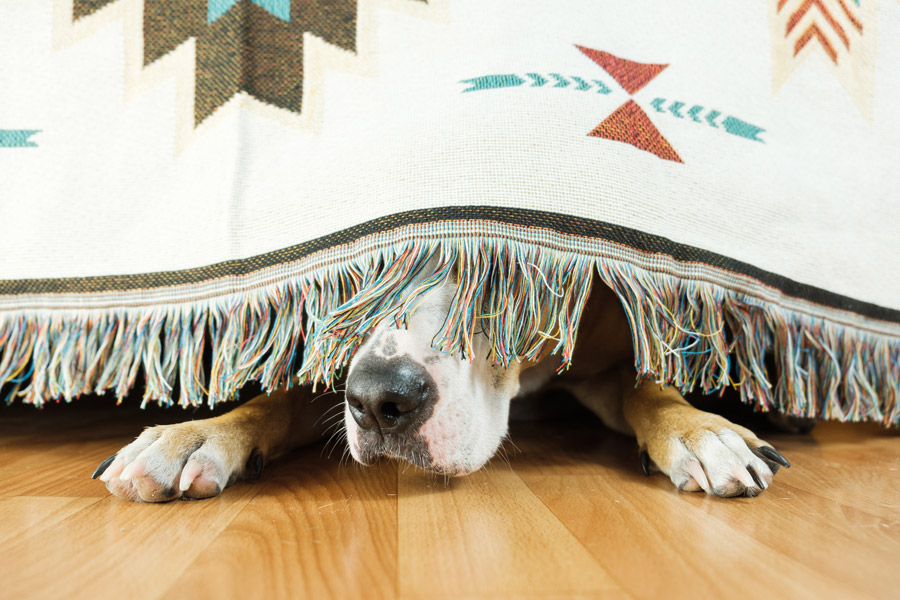
  • Hiding (cats like to do this more than dogs)
  • Urinating and defecating around the house in otherwise house-trained animals
  • Chewing
  • Panting
  • Pacing
  • Trying to escape (digging, trying to get out through windows, running away)
  • Dribbling
  • Over-dependence on the owner
  • Loss of appetite
  • Ignoring commands
  • Trembling or shaking
  • Uncharacteristic barking or meowing

Although it sounds wrong, it is important to try NOT to comfort nervous pets whilst they’re showing signs of fear or anxiety as it both rewards a fearful response and reinforces their belief that there is something to be fearful of.  Animals will also pick up on your anxiety which can make the problem worse, so try to remain calm and relaxed and carry on as if nothing is happening. Never punish your pet for fearful behaviour either, as they will associate the fear they feel with punishment and it will justify their fear to them.


Keep this information handy

If you have a potentially anxious pet – although it is generally a sensible list to keep handy – you should have the following information readily available to you during firework season. Storing it on your phone is a good way to do this.

You should note down:

  • Your pet’s microchip number/microchip database (microchips are now a legal requirement in dogs)
  • Local dog warden’s number
  • Local police contact
  • A clear photograph of your pet
  • Access to missing pet websites

Be aware that fireworks night is not just a night! As the date falls on a weekday this year, events will take place on the weekends either side and fireworks are sold well in advance of November 5th until after News Year’s Eve. If your pet is sensitive to them you need to ACT NOW to save them several months of distress.

What can I do?!

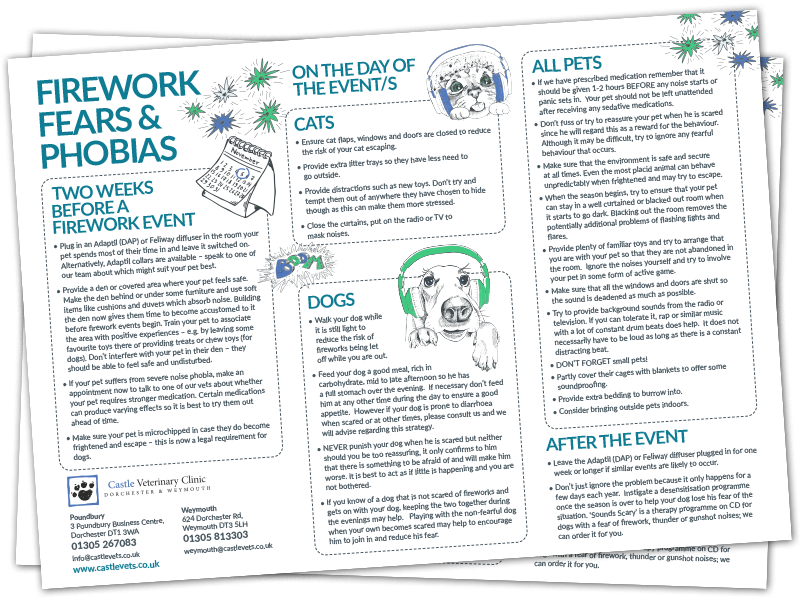
Download our FREE guide!

You can download our handy guide on Firework Fears and Phobias where we detail what you can do to help your cats, dogs, rabbits and other small animals during the weeks before and the day of the event. It’s packed with good ideas and will help get your pet through this potentially stressful time.

If you think your pet suffers from more than just minor anxiety or would like to discuss any behavioural issues, book an appointment to come and chat to us about it. We can offer behavioural consultations, supplements and plug-ins to help calm them, and in really bad situations we can prescribe sedatives.

Don’t let your pet suffer unnecessary anxiety.


To find out more and book an appointment, call the practice on  01698 361 136


Remember…

Castle Club members benefit from unlimited behaviour and training advice, which includes help with anxious pets, training and anything else you may need. (Not a member yet? Click here to read the full list of year-round benefits)

Health Benefits of Veterinary Acupuncture for Pets

Did you know that pets, as well as people, can respond really well to acupuncture?

We’re delighted to now be able to offer this ancient Chinese therapy as a holistic supplement to traditional veterinary care. Veterinary acupuncture can be particularly useful when dealing with mobility issues, chronic pain conditions such as joint pain, and gastrointestinal issues. It’s an ideal treatment for older, geriatric pets who can find the therapy quiet calming, although it’s a useful complementary treatment for all life-stages.

Veterinary acupuncture is thought to work in a few different ways:
  • It can stimulate the release of the pain relieving and anti-inflammatory chemicals as well as relax muscles at the site of the needle insertion, causing both local and more generalised pain relief
  • Veterinary acupuncture can improve blood flow to tissue, increase oxygenation and remove metabolic waste and toxins
  • Unlike prescription drugs, there are no potential adverse side effects. It can also safely be used in conjunction with traditional vet medicine

Vet Alice Moore, who joined us in April, has been treating patients with acupuncture for a number of years.

“I find veterinary acupuncture to be useful in treating a whole range of conditions” says Alice. “Owners are often surprised that cats, dogs and rabbits all tolerate acupuncture really well and I have used it to treat back pain, arthritis, bladder problems and all sorts of lameness issues”

Alice Moore

Veterinary Surgeon

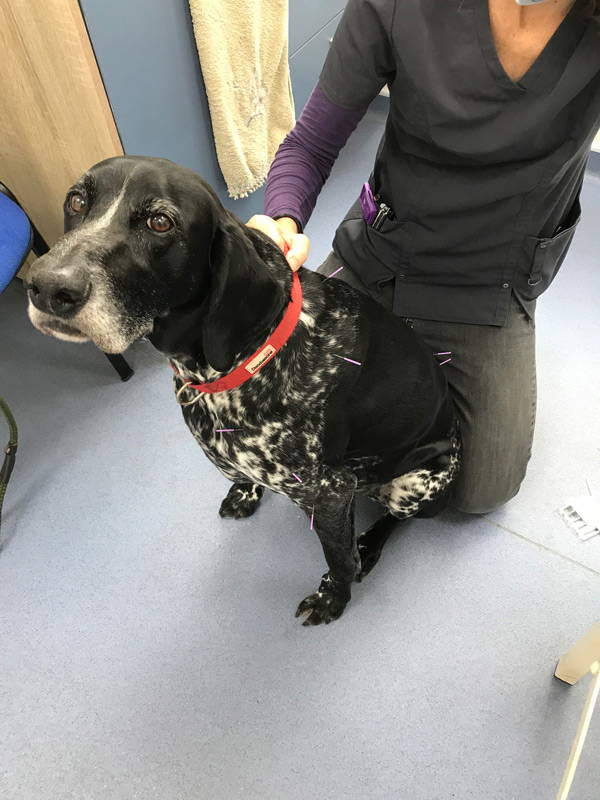
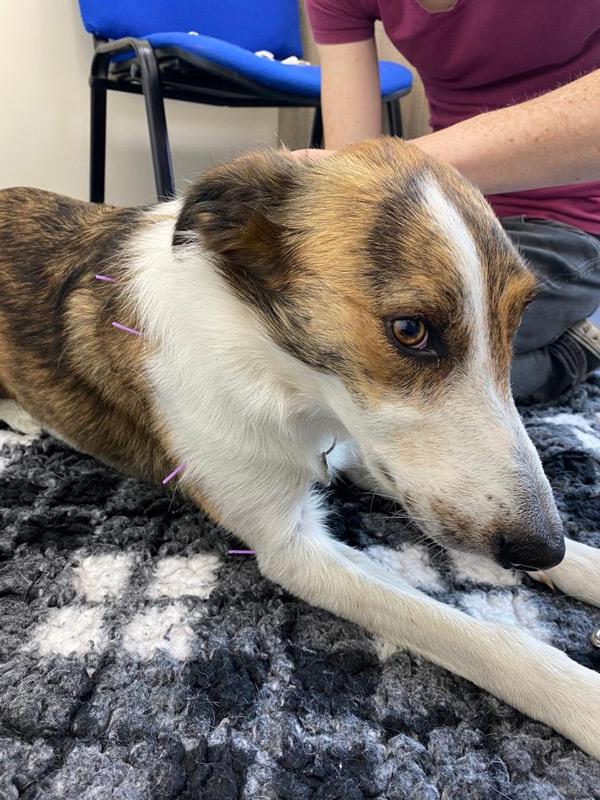
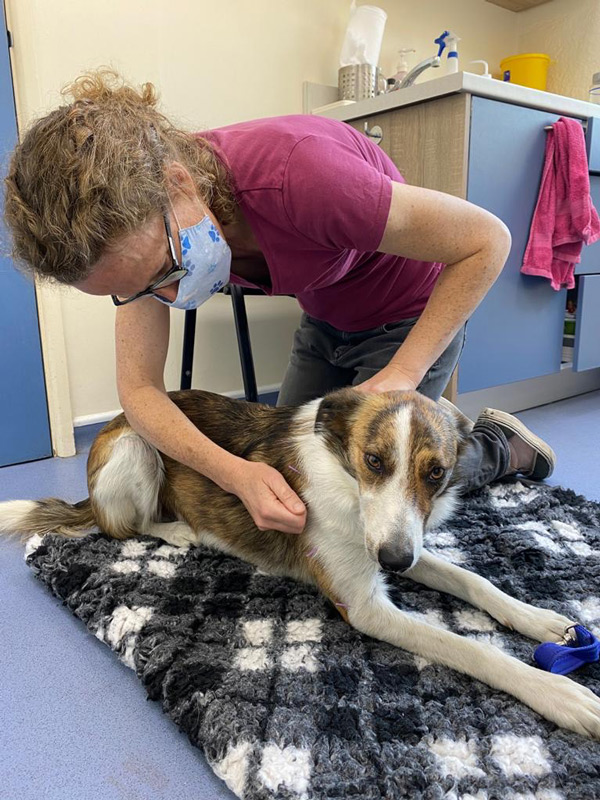
Here are some photos of Raz and Monty who are both being treated at our Dorchester clinic.

If you think your pet might benefit from veterinary acupuncture or are just interested to learn more, contact us on 01305 267083 or using Petsapp