
Back-to-School Routines & Alone Time for Pets

Back to school - alone time for pets | Castle Vets

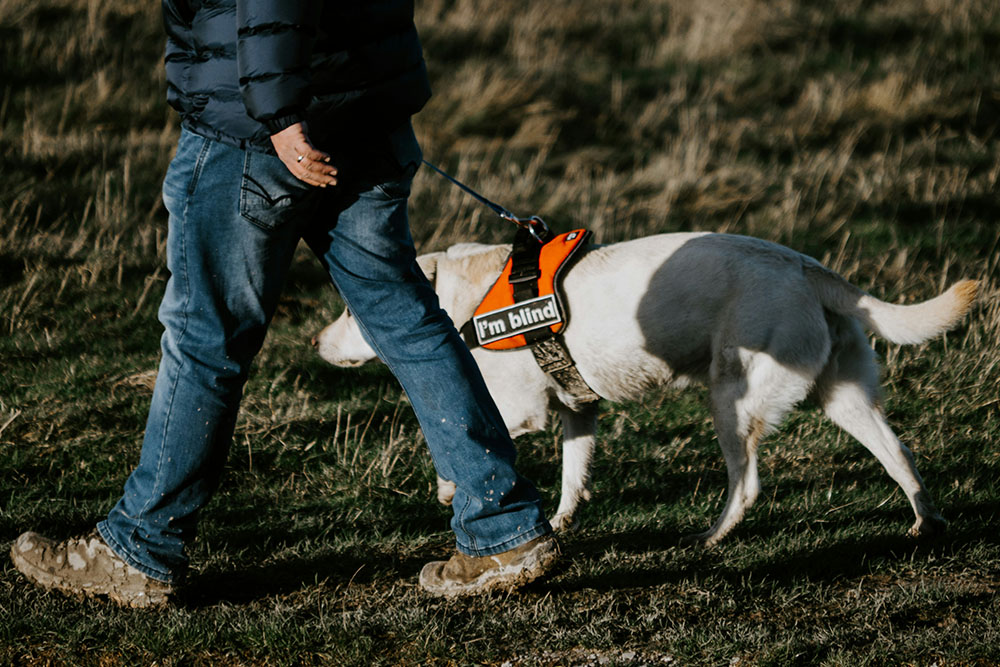
The end of the school holidays can mean a big change for the whole household. Earlier mornings, packed lunches, school runs and longer periods out of the house can quickly become the new normal.

For pets, though, that change can feel rather sudden.

If your dog or cat has become used to having people around more during the holidays, going back to a quieter house can be an adjustment. Some pets cope perfectly well, while others may show signs of boredom, stress or difficulty being left alone.

The good news? A little preparation can make the transition much smoother. By introducing changes gradually and keeping the parts of your pet’s routine that matter most, you can help them feel secure while the household gets back into its usual rhythm.

Why does going back to school affect pets?

Dogs and cats are creatures of habit, and changes to household routines can affect their behaviour. Dogs are particularly social and may need to learn that being alone is safe and manageable. Cats are generally more independent, but they can still find sudden changes to feeding, playtime, sleep patterns or the amount of company they receive stressful.

A change in routine does not automatically mean your pet will develop separation-related problems. However, it is worth watching how they respond, particularly if they have previously struggled when left alone.

The aim is not to make your pet completely independent. It is to help them feel confident and settled when they cannot be with you.

Start adjusting the routine before the first school day

If possible, avoid going from ‘everyone is home’ to ‘everyone is out’ overnight.

In the days before school starts, begin moving towards the routine you will use during term time. Gradually bring breakfast, walks, playtime and quiet time closer to their usual school-day timings.

For dogs, practice short periods of separation while you are still nearby. This might mean encouraging them to settle behind a baby/pet gate while you work in another room, or briefly stepping outside and returning before they become worried.

Keep increases small. If your dog becomes distressed, go back to an easier stage rather than pushing through it. Current behaviour guidance recommends gradual exposure and rewarding calm behaviour rather than forcing a pet to cope with more time alone than they can manage.

For cats, consistency can be particularly helpful. Keep meals, play sessions and other familiar parts of the day reasonably predictable, while making sure they have quiet places where they can retreat and rest.

Back to school - alone time for pets | Castle Vets

How to help your dog cope with alone time

We recommend teaching your dog that being alone can be a positive, predictable experience. This is best introduced gradually, starting with very short periods and increasing the time only while the dog remains relaxed.

Try these practical steps:

  • Create a comfortable resting area.
  • Practice ‘settle’ time and reward calm behaviour.
  • Make leaving and returning calm and low-key.
  • Provide appropriate, previously tested enrichment.
  • Give your dog a suitable walk and toilet opportunity before leaving.
  • Consider a pet camera so you can see what happens when you are out.
  • Keep alone time within your dog’s ability.

There is no single ‘safe number of hours’ that suits every dog. Dogs Trust and the RSPCA advise avoiding leaving dogs alone for more than around four hours, with puppies needing much shorter periods and dogs with separation-related problems potentially struggling within minutes.

If the school day means your dog would regularly be alone for longer than they can comfortably manage, consider a dog walker, sitter, trusted family member, neighbour or suitable day-care arrangement.

Signs your dog may be struggling

Not every bark or chewed slipper means separation anxiety. But a pattern of behaviour that happens around departures or while your dog is alone is worth investigating.

Look out for barking, whining or howling; pacing or restlessness; panting, lip-licking or repeated yawning when not tired; scratching at doors or attempts to escape; destructive behaviour; toileting indoors despite being house-trained; refusing food or enrichment they normally enjoy; or becoming extremely unsettled as you prepare to leave.

Some dogs show signs within minutes of being left. Others may show more subtle changes. A camera can help you understand what is actually happening when nobody is home.

Importantly, don’t punish your dog for behaviour that has happened while you were away. If anxiety is involved, punishment can increase fear and make the problem harder to resolve.

How Back-to-School Routines Can Affect Cats

Cats may cope differently from dogs, but they are not immune to routine changes.

A cat that has enjoyed having children around all day may suddenly find the house much quieter. Others may actually appreciate the peace and sleep through most of the day!

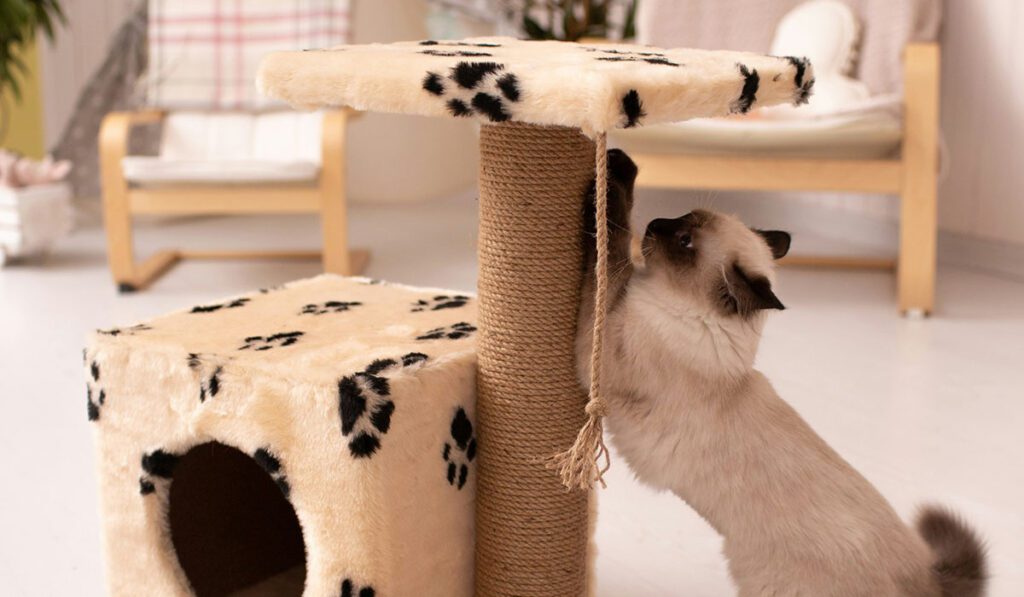
Keep the basics predictable. Aim for consistent feeding and playtimes, and make sure your cat has comfortable resting areas, hiding places and opportunities to climb, scratch and explore.

Enrichment can help prevent boredom. Rotate suitable toys, use puzzle feeders for some meals and provide safe places to investigate. Short interactive play sessions before the family leaves can also provide useful mental and physical stimulation.

Watch for increased hiding, changes in eating, toileting outside the litter tray, over-grooming, excessive vocalisation or reduced interest in normal activities. These signs can have many causes, including stress and medical problems, so speak to a vet if your cat’s behaviour changes or you are concerned.
Back to school - alone time for pets | Castle Vets

The back-to-school checklist

✓ Start adjusting the routine gradually.
✓ Practice short, calm periods apart.
✓ Keep meals, walks and playtime reasonably predictable.
✓ Give your pet a comfortable, familiar place to rest.
✓ Provide safe enrichment appropriate for their species and individual needs.
✓ Make sure fresh water is available.
✓ Remove hazards that could cause problems while you are out.
✓ Plan who can help if your pet cannot comfortably manage the school day alone.
✓ Use a camera if you are unsure how your pet behaves when left.
✓ Speak to your vet early if you notice worrying changes in behaviour.

When should you contact your vet?

If your pet is suddenly struggling to cope alone, don’t assume they will simply ‘get used to it’. Behaviour changes can have several causes, and pain or illness can sometimes contribute.

For dogs showing possible separation-related behaviour, a vet can help assess the situation and may recommend behavioural support. In more severe cases, veterinary treatment can form part of a wider behaviour plan.

For cats, a change in behaviour should also be taken seriously. Stress can affect cats physically as well as emotionally, and signs such as appetite changes, toileting problems or weight loss deserve veterinary attention.

The earlier you ask for help, the easier it can be to put a plan in place.

A little routine can make a big difference

Back-to-school season is a change for everyone – including the four-legged members of the family.

You don’t need to create a perfect schedule. Focus on predictable routines, gradual changes, positive experiences and making sure your pet’s needs are met while the household is out.

And remember: if your pet is struggling with alone time, this isn’t them being naughty or difficult. They may be telling you that they are worried, bored, frustrated or uncomfortable.

If you are concerned about your pet’s behaviour or wellbeing, speak to our veterinary team. We can help you work out what may be going on and what support your pet needs.

Keeping Pets Safe in Hot Weather: Essential Summer Advice

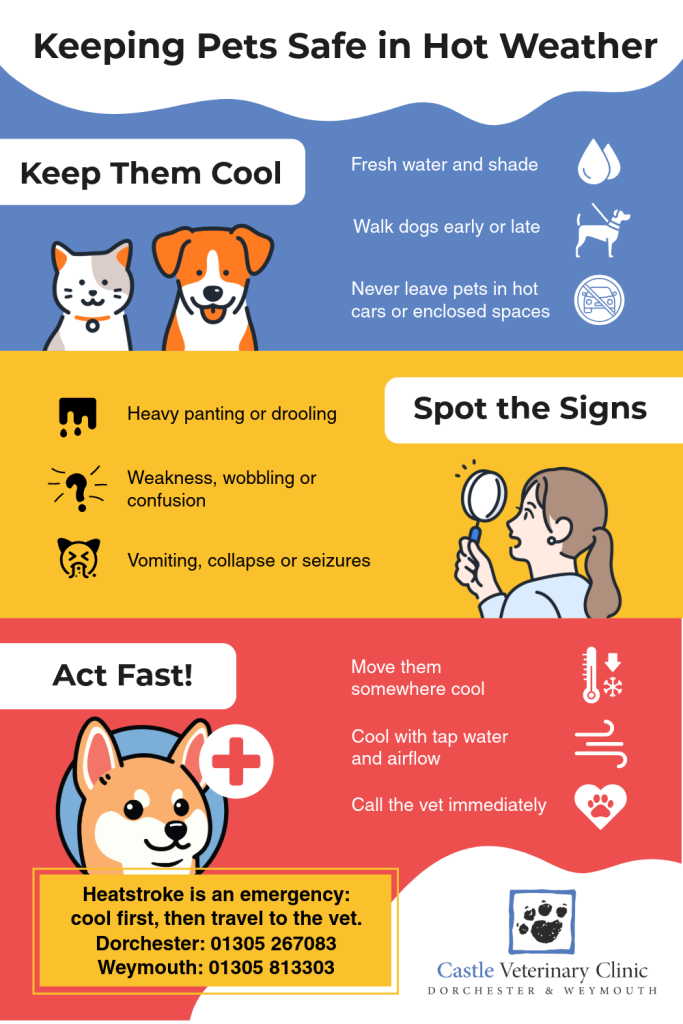
The infographic above covers the essentials at a glance. Below, we take a closer look at why hot weather can be dangerous, which pets are most vulnerable, how to adapt everyday routines and what to do if you suspect heatstroke.

Warm weather can be lovely, but even a mild-looking UK summer day can become uncomfortable or dangerous for pets. Dogs, cats, rabbits and small pets do not manage heat in the same way we do, and enclosed spaces can become dangerously hot far more quickly than many owners expect.

A few changes to your pet’s routine can greatly reduce the risk of overheating. It is also important to recognise the early signs of heat-related illness and know what to do if your pet begins to struggle.

Why Hot Weather Can Be Dangerous for Pets

Pets have limited ways to lose excess body heat. Dogs mainly cool themselves by panting, while cats may seek cooler surfaces, groom more and become less active. Rabbits and many small pets are especially vulnerable because they cope poorly with high temperatures and can quickly overheat in a warm hutch, cage, shed or room.

Heatstroke happens when a pet’s body temperature rises to a dangerous level and their normal cooling mechanisms can no longer cope. It can damage the brain and other organs, and it can be fatal.

Heat-related illness is not only linked to hot cars. Exercise is a major trigger in dogs, and cases can occur outside obvious heatwaves, particularly when pets are active in warm, humid or poorly ventilated conditions.

Which Pets Are Most at Risk?

Any pet can overheat, but some need extra care during warmer weather. Higher-risk pets include:

  • Flat-faced dogs and cats, such as Bulldogs, Pugs, French Bulldogs and Persians
  • Older pets and very young animals
  • Pets that are overweight
  • Pets with heart disease, breathing problems or reduced mobility
  • Dogs with thick or double coats
  • Highly active dogs that may continue playing or running despite becoming too hot
  • Rabbits, guinea pigs and other small pets housed in direct sunlight or poorly ventilated spaces

These pets may need shorter periods outside, more frequent rest and closer monitoring, even when the weather does not feel extremely hot to you.

Simple Ways to Keep Pets Cool

Provide Water, Shade and Ventilation

Make sure your pet always has access to fresh drinking water. On warmer days, place extra bowls around the home and garden in case one is knocked over or becomes warm.

Keep beds, cages and resting areas away from direct sunlight and choose the coolest, best-ventilated part of the home. Closing curtains or blinds on sunny windows can help prevent rooms from heating up.

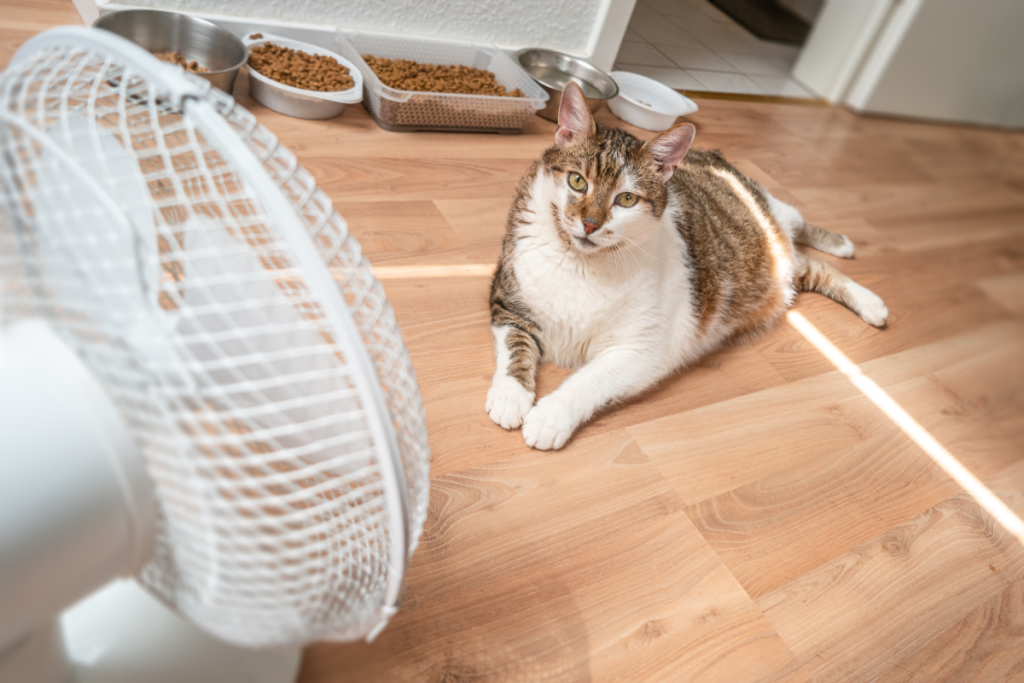
Fans may improve airflow, but pets should always be able to move away from them. Cooling mats, chilled ceramic tiles or a cool, damp surface can also provide relief.

Frozen water bottles wrapped in a towel can be placed beside, rather than directly against, a rabbit or guinea pig’s resting area.

Adjust Dog Walks and Exercise

Walk dogs during the coolest parts of the day, usually early in the morning or later in the evening. Keep walks shorter and gentler when it is warm, and choose shaded routes where possible.

Missing a walk or replacing it with calm indoor enrichment is safer than exercising in unsuitable heat. Food puzzles, scent games and short training sessions can provide mental stimulation without strenuous activity.

Pavements and artificial surfaces can become much hotter than the surrounding air and may burn paw pads. Check the ground before walking and avoid it when it feels uncomfortably hot to your hand.

Remember that energetic dogs may not choose to stop by themselves, so owners need to set the limit before their pet becomes exhausted or overheated.

Never Leave a Pet in a Hot Enclosed Space

Never leave a pet in a parked car on a warm day, even with the windows partly open or for only a few minutes. Cars can heat up rapidly and become dangerously hot.

Conservatories, caravans, sheds, greenhouses and poorly ventilated rooms can also become unsafe. Always check the temperature and ventilation before leaving a pet in an enclosed area.

Plan journeys carefully, use air conditioning where available and take regular breaks with access to fresh water.

Hot Weather Care for Cats

Cats often manage warm days by sleeping more and finding cooler places, but they still need support from their owners.

Provide several water bowls around the home and keep indoor areas ventilated. Some cats prefer running water, so a pet drinking fountain may encourage them to drink more.

Check sheds, garages, greenhouses and vehicles before closing doors, as cats may enter these spaces to explore or find somewhere quiet to sleep.

Pale or thinly furred cats can also be vulnerable to sunburn, particularly on the ear tips and nose. Ask your vet about a suitable pet-safe sun protection product rather than using human sunscreen, which may contain ingredients that are harmful if licked.

Panting or open-mouth breathing is unusual in cats and should be treated as a warning sign. Move your cat somewhere cool and contact your vet promptly.

Hot Weather Care for Rabbits and Small Pets

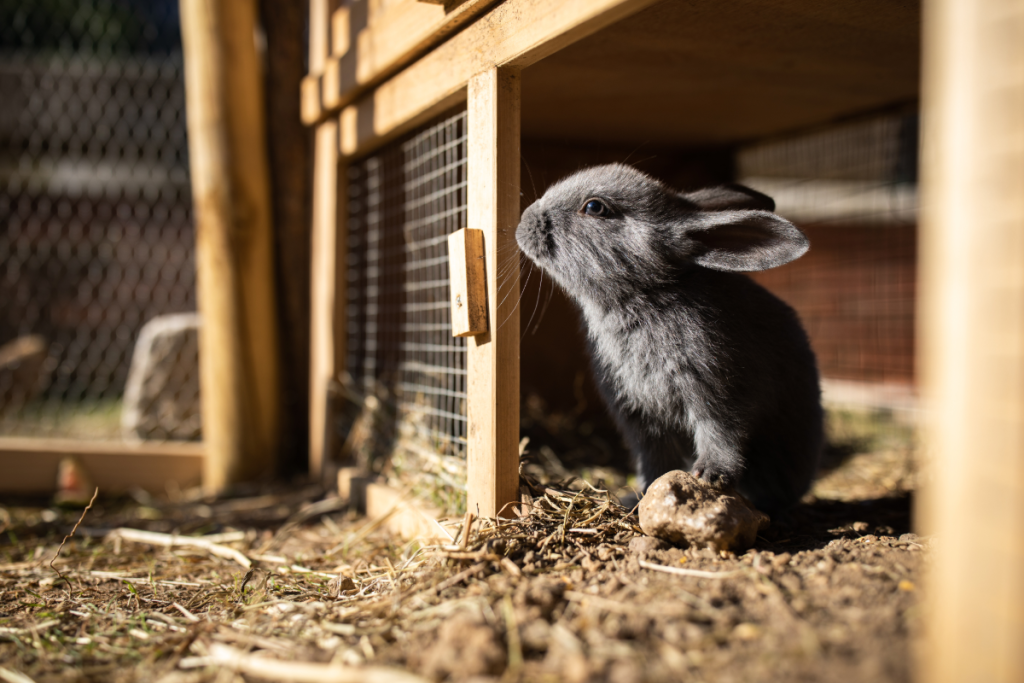
Rabbits, guinea pigs and other small pets can overheat quickly, particularly when housed outdoors.

Move outdoor accommodation into permanent shade and remember that the position of the sun changes throughout the day. An area that is shaded in the morning may be in full sun by the afternoon.

Hutches and runs need good ventilation while still keeping pets secure from predators. Indoors, move cages away from sunny windows, radiators and warm electrical appliances.

Provide cool resting surfaces and consider placing a frozen water bottle wrapped in a towel beside their sleeping area. Replace it as it warms and make sure your pet can move away from it.

Check rabbits at least twice daily during warmer weather. Heat also increases the risk of flystrike, so keep bedding clean and regularly check the fur around your rabbit’s bottom.

Contact your vet promptly if you notice:

  • Wet, dirty or matted fur around the bottom
  • Wounds or sore skin
  • Flies or maggots
  • Reduced appetite
  • Fewer or smaller droppings
  • Weakness, rapid breathing or unusual quietness

A rabbit that has stopped eating or producing droppings needs urgent veterinary advice.

Signs Your Pet May Be Overheating

Early signs of overheating can progress quickly, so it is important to act as soon as something appears wrong.

Warning signs may include:

  • Heavy, rapid or unusual panting
  • Excessive drooling or a very wet mouth
  • Restlessness or distress
  • Repeatedly seeking shade or cool surfaces
  • Bright red or unusually pale gums
  • Weakness, drowsiness or poor coordination
  • Vomiting or diarrhoea
  • Confusion or reduced responsiveness
  • Collapse or seizures

Cats may pant or breathe with an open mouth, which is always concerning.

Rabbits may breathe rapidly, have hot or reddened ears, appear weak, lie stretched out or become unusually quiet and unresponsive.

What to Do if You Think Your Pet Has Heatstroke

Heatstroke is a veterinary emergency. Begin cooling your pet immediately and contact the practice for urgent advice.

  1. Stop all activity. Move your pet into shade or a cool, well-ventilated area.
  2. Apply cool tap water to the body. The water does not need to be ice-cold. It simply needs to be cooler than your pet.
  3. Encourage airflow. Use a fan, air conditioning or natural airflow to support evaporation.
  4. Offer small amounts of water. Only do this if your pet is alert and able to drink normally. Do not force water into their mouth.
  5. Call the vet immediately. Arrange an urgent assessment and continue cooling your pet while preparing for transport.

Do not wrap an overheating pet in wet towels. Towels can quickly become warm and may trap heat against the body.

Do not delay veterinary care because your pet appears to improve. Internal complications can develop even after their breathing settles or their body temperature begins to fall.

A Little Preparation Makes a Big Difference

Check the weather forecast before walks, journeys or days out, and make a cooler alternative plan when necessary.

Keep fresh water available, create shaded resting areas and pay extra attention to pets with known risk factors. Make sure anyone caring for your pet also understands their routine and knows the warning signs of overheating.

Hot weather safety is not about stopping pets from enjoying summer. It is about adapting their routine so they can enjoy it safely and comfortably.

Worried About Your Pet in the Heat?

If your pet is struggling to breathe, appears weak, collapses or shows other signs of heatstroke, contact the practice immediately: Dorchester (Poundbury): 01305 267083 / Weymouth: 01305 813303

For non-urgent summer care advice, speak to our team. You can also ask us how the practice health plan can help you stay on top of routine preventative care throughout the year.

Dental Health for Dogs and Cats – Why Oral Care Matters

Why Dental Health Is So Important for Pets

Dental care for dogs and cats is about far more than fresh breath. Plaque and tartar build-up can lead to gum inflammation, infection, loose or painful teeth, and chronic discomfort. If left untreated, bacteria from the mouth can enter the bloodstream and may affect vital organs such as the heart, liver and kidneys.

Cats are particularly good at hiding dental pain, and many will continue eating despite significant discomfort.

Common Signs of Dental Disease in Dogs and Cats

Dental disease can affect dogs and cats of all ages, including puppies and kittens, although the signs may vary depending on age and dental development. Signs include:

  • Bad breath
  • Red, swollen or bleeding gums
  • Yellow or brown tartar on the teeth
  • Dropping food or chewing on one side
  • Pawing at the mouth or face
  • Reduced appetite or weight loss
  • Behaviour changes, such as irritability or withdrawal

What Causes Dental Problems in Pets?

The main cause of dental disease is plaque – a sticky film of bacteria that forms on the teeth. If plaque isn’t removed, it hardens into tartar, which irritates the gums and allows infection to develop below the gumline.

Some pets are more prone to dental disease, including:
  • Small and flat-faced dog breeds
  • Cats with crowded teeth
  • Older pets
  • Pets fed mainly soft food
  • Pets without regular dental care routines

How to Look After Your Pet’s Teeth at Home

A consistent dental routine should start early. Puppy dental and kitten dental care help build positive habits and lay the foundations for healthy adult teeth.

Tooth Brushing:

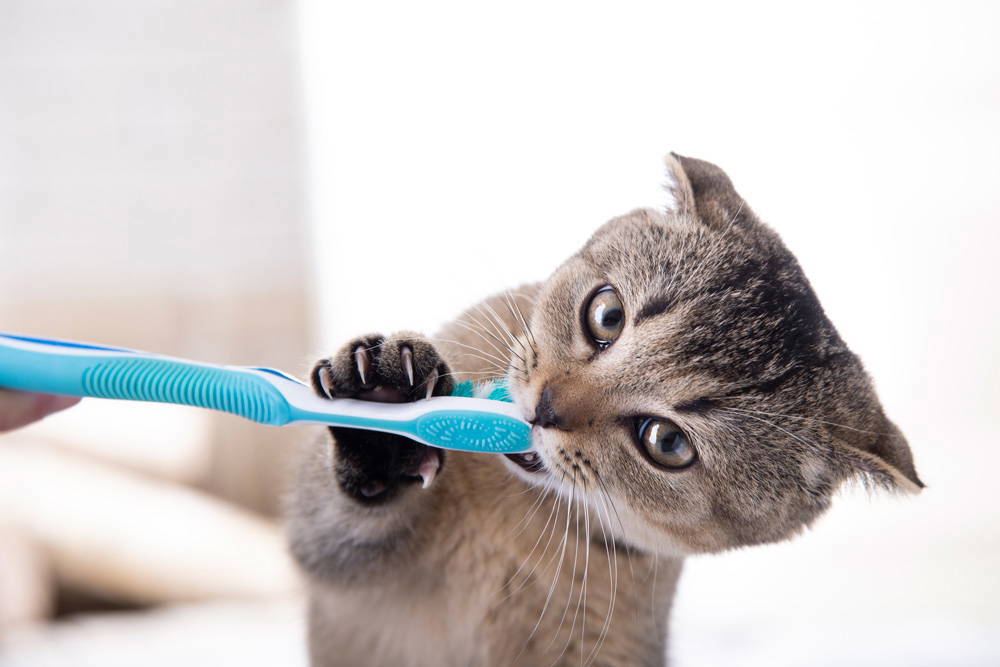
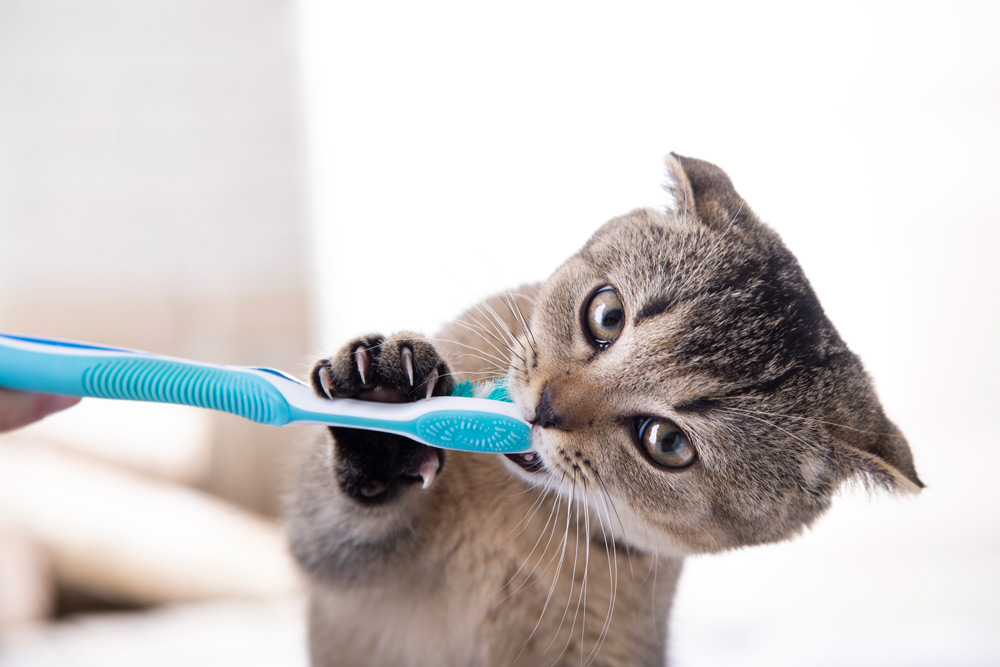
Daily tooth brushing is the gold standard for preventing dental disease. Use a pet-specific toothbrush and toothpaste – never human toothpaste.

Dental Diets and Chews:

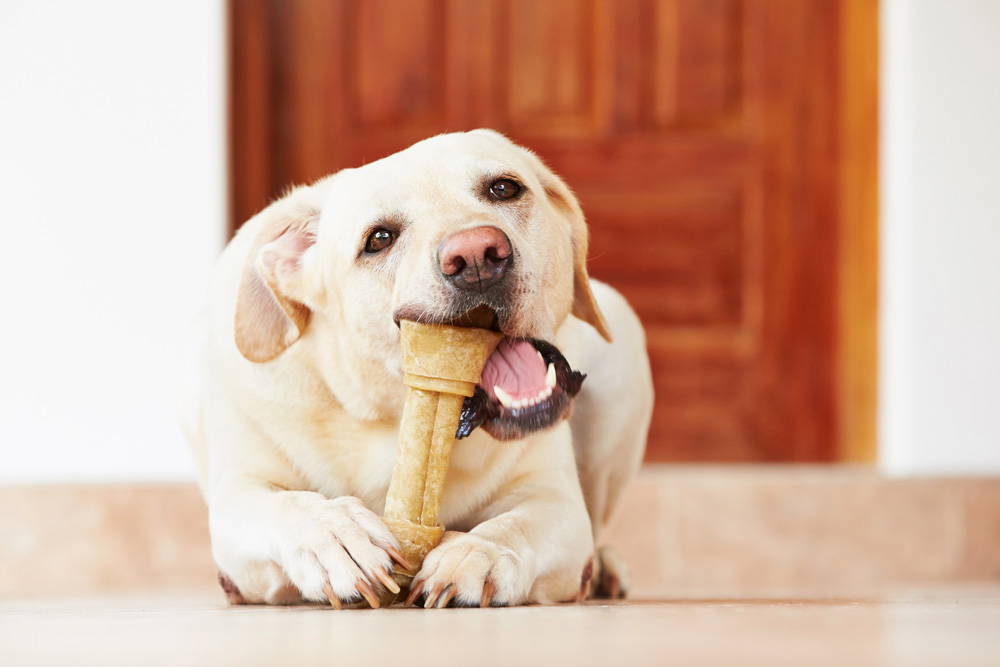
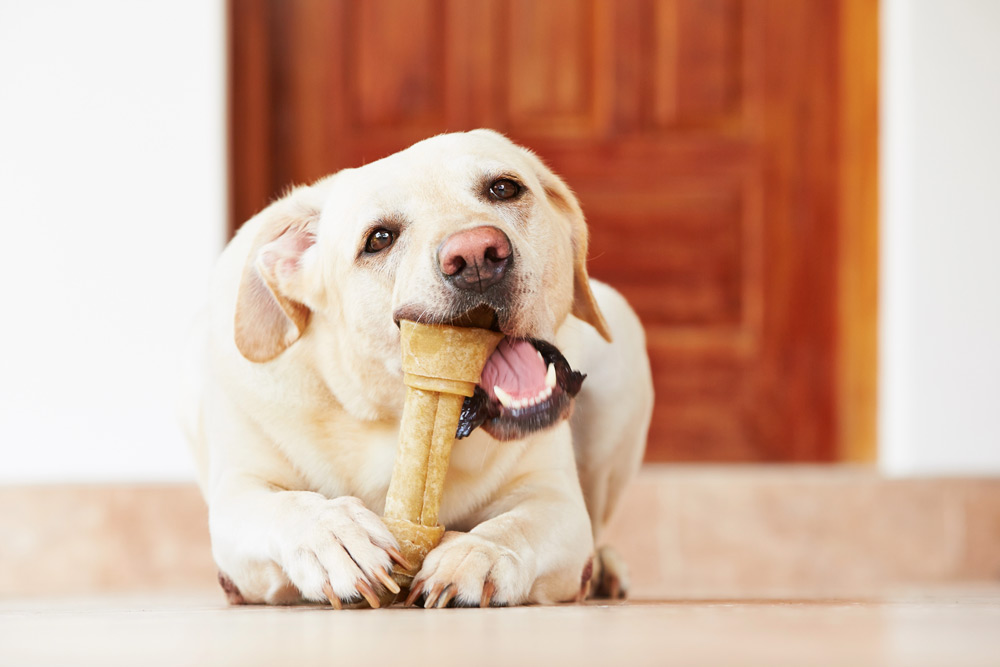
Veterinary-approved dental diets and chews can help reduce plaque and tartar build-up.

Regular Mouth Checks:

Getting your pet used to gentle mouth checks at home makes it easier to spot problems early.

Professional Dental Treatment at the Vet

Professional dog dental and cat dental treatment plays an important role when home care alone isn’t enough. Dental procedures are carried out under general anaesthetic, allowing a thorough examination, cleaning and polishing of the teeth. Dental X-rays may be used to assess tooth roots below the gumline.

When Should I Speak to a Vet?

If your pet has bad breath, visible tartar, sore gums, or if you’re unsure how to start a dental routine, get in touch with us by calling Dorchester: 01305 267083 / Weymouth: 01305 813303, and our team will be happy to help.

The Castle Club | Pet Healthcare Plan from Castle Vets Dorchester and Weymouth

Get Regular Health Checks and Save 10% on Dental Treatment 

With The Castle Club, you save 10% on dental treatments and get a full health check every 6 months making it easy to stay on top of your pet’s dental health.

How to Keep Your Pet Calm During Fireworks Season

How to keep your pets calm during fireworks on Bonfire Night | Castle Vets

Bonfire Night can be a stressful time for pets. Loud bangs, flashing lights, and unfamiliar noises can trigger fear and anxiety in our furry companions.

As caring pet owners, it’s essential to take steps to ensure their comfort and safety. Here’s how you can help your pet stay calm and stress-free during fireworks.

1. Create a Safe Space
  • Set Up a Den: Choose a quiet room away from windows and doors where your pet can feel safe. Add their favourite bedding and toys for extra comfort.
  • Draw Curtains and Play Sounds: Close curtains to block out the flashing lights, and play calming music or white noise to drown out firework sounds.
  • Encourage Their Use: Introduce the safe space before Bonfire Night, so your pet knows it’s a comforting area.
How to keep your pets calm during fireworks on Bonfire Night | Castle Vets
2. Stick to a Routine
  • Feeding and Walks: Feed your pet and take them for walks before fireworks begin to avoid outdoor exposure during noisy times.
  • Avoid Changes: Stick to regular mealtimes, playtimes, and cuddles to provide reassurance.
How to keep your pets calm during fireworks on Bonfire Night | Castle Vets
3. Use Calming Products
  • Calming Sprays and Diffusers: Products containing pheromones, such as Adaptil or Feliway, can help create a soothing environment.
  • Anxiety Wraps: Consider a snug-fitting anxiety wrap or thunder shirt to provide a sense of security.
  • Speak to Your Vet: For pets with severe firework phobias, your vet may recommend calming supplements or short-term medications.
How to keep your pets calm during fireworks on Bonfire Night | Castle Vets
4. Distract with Toys and Treats
  • Puzzle Feeders: Offer a treat-dispensing toy or puzzle feeder to keep them mentally stimulated.
  • Interactive Play: Spend time playing games with your pet to redirect their focus.
How to keep your pets calm during fireworks on Bonfire Night | Castle Vets
5. Keep Pets Indoors
  • Lock Doors and Windows: Make sure all exits are secure to prevent pets from running off in panic.
  • Microchip and ID: Double-check your pet’s microchip details are up to date and that they’re wearing a collar with identification.
How to keep your pets calm during fireworks on Bonfire Night | Castle Vets
6. Avoid Punishment
  • If your pet reacts to the fireworks, avoid scolding them. Instead, offer comfort and reassurance. Allow them to respond in a way that feels natural to them, whether it’s hiding or seeking your attention.
How to keep your pets calm during fireworks on Bonfire Night | Castle Vets
7. Plan Ahead for Future Events
  • Desensitisation Training: Gradual exposure to firework sounds over time can help reduce sensitivity.
  • Professional Help: Consult a pet behaviourist for personalised advice and training.
How to keep your pets calm during fireworks on Bonfire Night | Castle Vets

By following these tips, you can help your pet feel more secure and less anxious during Bonfire Night. Remember, your veterinary team is here to help with tailored advice and solutions to suit your pet’s needs.
Let’s help your pet stay calm this fireworks season.

If your pet struggles with loud noises or stress, speak to our vets or nurses about tailored behaviour advice and proven calming solutions.

Our team can offer one-to-one advice, behaviour support, and recommend trusted products that can help ease anxiety.

🐾 Call us or book a pre-fireworks consultation now 🐾

What Are the Signs of Ill Health in Your Pet?

What are the signs of ill health in your pet | Castle Vets

What are the signs that your pet isn’t feeling well?

As a loving pet owner, it’s natural to notice every wag, purr or peculiar habit. But when should you start to worry that something’s not quite right? Pets can’t tell us when they’re feeling off — so it’s up to us to spot the signs of ill health early.

Here’s how to recognise when your dog or cat might need a trip to the vet:
1. Changes in appetite or drinking habits

If your pet suddenly eats much less (or more) than usual, or is drinking excessively, it could signal anything from dental disease to diabetes or kidney problems.

2. Behavioural changes

Has your usually affectionate cat become withdrawn? Is your lively Labrador suddenly lethargic? Changes in mood, activity or interaction can be early indicators of pain or discomfort.

3. Vomiting or diarrhoea

Occasional tummy upsets aren’t unusual, but ongoing vomiting or diarrhoea can indicate infection, parasites, allergies, or something more serious.

 4. Breathing issues

Wheezing, persistent coughing or laboured breathing should never be ignored. These symptoms could suggest anything from a respiratory infection to heart disease.

5. Poor coat condition or itching

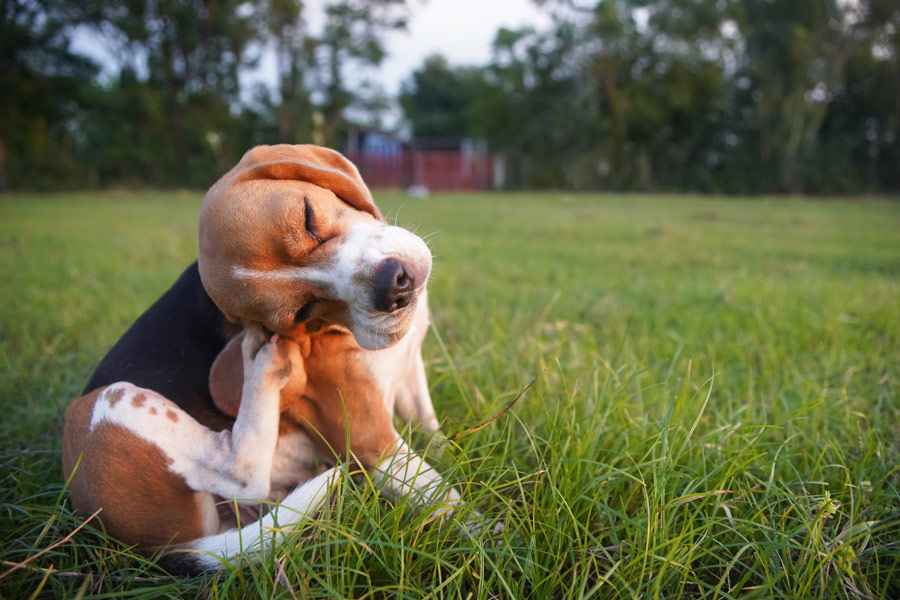
A healthy pet’s coat should be glossy and smooth. Flaky skin, bald patches, or frequent scratching might mean allergies, parasites, or hormonal imbalances.

6. Changes in weight

Sudden weight gain or loss can be subtle but important. Regular weigh-ins can help catch long-term health issues early.

7. Lumps, bumps and swellings

While not all lumps are dangerous, any new growth or swelling should be checked by a vet – especially if it’s growing or painful.

8. Bad breath or dental problems

Dental disease is one of the most common conditions seen in UK pets. If your pet has smelly breath, is drooling more than usual or struggling to chew, book a check-up.

When in doubt - check it out

Early detection can make all the difference in treating illness. If you’re ever unsure about your pet’s symptoms, it’s always better to be safe and give us a call.

The Castle Club makes it easier than ever to stay on top of routine care with included regular health checks, plus vaccinations, flea and worm treatment, and discounts on consultations.

How Can You Tell If Your Pet Has Fleas or Ticks?

As a pet owner, keeping your furry friends safe and healthy is a top priority. Fleas and ticks can cause discomfort, irritation, and even serious health problems for your pets. Recognising the signs of an infestation early on is crucial to protecting their well-being. Here’s what to look out for and how you can keep these pesky parasites at bay.

Common Signs of Fleas in Pets

Fleas are tiny, fast-moving insects that feed on your pet’s blood. While spotting the actual fleas can be challenging due to their size and speed, there are several tell-tale signs of an infestation:

  • Excessive Scratching and Biting: If your pet is scratching more than usual, especially around the head, neck, and tail area, this could indicate fleas. Biting and nibbling at their own skin is also common.
  • Red, Inflamed Skin: Flea bites can lead to red, irritated patches on your pet’s skin, particularly if they have a sensitivity or allergy to flea saliva.
  • Hair Loss: Persistent scratching and biting can cause bald patches, mainly around the back and base of the tail.
  • Flea Dirt: Black or dark brown specks, often found on your pet’s skin and fur, may be flea droppings. To check, place the specks on a damp tissue — if they turn red, it’s likely flea dirt.

How to Spot Ticks on Your Pet

Ticks are parasitic arachnids that attach themselves to your pet’s skin and feed on their blood. Unlike fleas, ticks are larger and can often be seen or felt when grooming your pet. Here’s what to watch for:

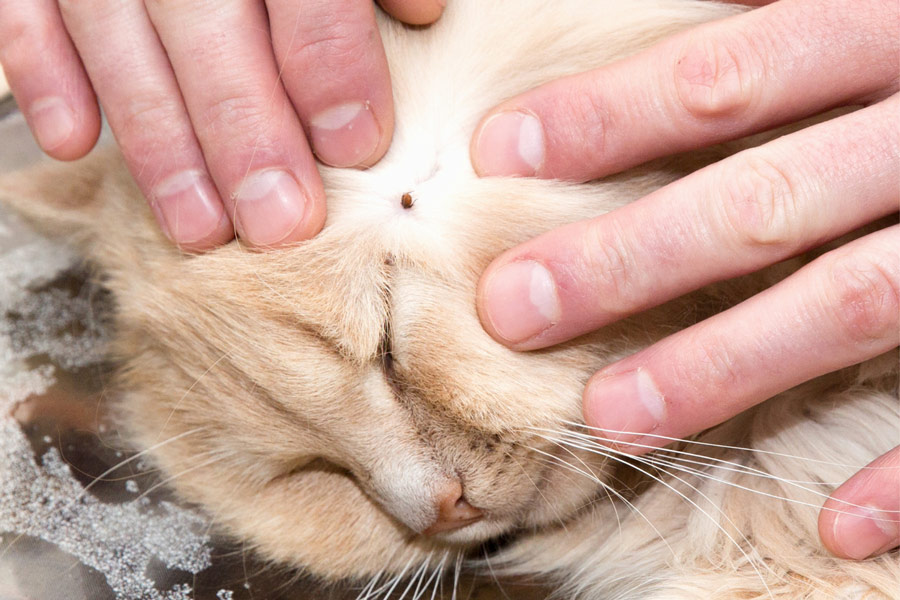
  • Visible Ticks: Ticks can look like small, grey or brown bumps. They tend to latch onto areas like the ears, neck, and underarms where the skin is thinner.
  • Skin Irritation: You might notice redness or swelling around the bite area. Ticks can transmit diseases, so early removal is essential.
  • Lethargy and Weakness: In some cases, pets infested with ticks can become weak or lethargic due to blood loss, especially if multiple ticks are feeding.

Preventing Flea and Tick Infestations

Prevention is always better than treatment when it comes to fleas and ticks. Here are a few tips to keep your pet parasite-free:

  1. Regular Grooming: Routine grooming helps you spot any fleas or ticks early on. Use a fine-toothed comb to check for fleas, particularly around the neck and tail.
  2. Monthly Flea and Tick Preventatives: Talk to your vet about the best flea and tick treatments for your pet. Our in-house health plan includes comprehensive parasite prevention options.
  3. Inspect Your Pet After Walks: Especially after walks in wooded or grassy areas, check your pet for ticks. Be thorough around the ears, neck, and under the legs.
  4. Keep Your Home Clean: Regularly vacuum your home, wash pet bedding, and treat your garden to minimise the risk of fleas.

What to Do if You Find Fleas or Ticks on Your Pet

If you suspect that your pet has fleas or ticks, it’s essential to take action immediately:

  • Use Vet-Recommended Treatments: Over-the-counter products may not always be effective, so consult your vet for safe and reliable options.
  • Remove Ticks Carefully: If you find a tick on your pet, we recommend using a tick removal tool, such as the OTOM Tick Remover (available to buy at reception). Gently hook the tool under the tick and twist it anticlockwise to safely remove it. Avoid squeezing the tick to reduce the risk of parts being left behind.
  • Keep Up with Preventative Care: Even if you’ve treated a current infestation, maintaining regular flea and tick preventatives is key to avoiding future problems.
The Castle Club | Pet Healthcare Plan from Castle Vets Dorchester and Weymouth

Stay Protected with The Castle Club

Our practice offers a range of preventative care options as part of our in-house health plan. Contact us today to learn more about how we can help keep your pet safe from parasites all year round.

How Do I Know if My Pet Has Dental Problems?

How Do I Know if My Pet Has Dental Problems?
Why Dental Health Matters for Your Pet 

Good dental health is essential for your pet’s overall well-being. Dental disease is common in cats, dogs, and rabbits, and if left untreated, it can cause pain, infections, and even impact other organs such as the heart, liver, and kidneys. Recognising the signs of dental problems early can help prevent serious health issues and keep your pet happy and healthy.

pet dental health
Signs Your Pet May Have Dental Problems 
  • Bad Breath (Halitosis): Persistent foul-smelling breath can indicate dental disease, such as gum infections or tooth decay. 
  • Difficulty Eating or Chewing: If your pet is reluctant to eat, chews on one side, or avoids hard food, it may be experiencing dental pain. 
  • Excessive Drooling: Thick saliva or saliva with blood may be a sign of oral discomfort or infection. 
  • Swollen or Bleeding Gums: Red, swollen, or bleeding gums can indicate gingivitis or severe periodontal disease. 
  • Loose or Broken Teeth: Wobbly or visibly damaged teeth may indicate advanced dental disease. 
  • Pawing at the Mouth or Face: Pets may paw at their mouth or rub their face due to discomfort. 
  • Weight Loss or Behavioural Changes: Avoiding food, losing weight, or becoming withdrawn may indicate dental pain. 
  • Facial Swelling (Rabbits & Some Dogs): Swelling around the jaw or face may indicate an abscess or infection. 
How to Prevent Dental Problems in Pets 
For Cats and Dogs: 
  • Brush Their Teeth Regularly: Use a pet-specific toothbrush and toothpaste to prevent gum disease. 
  • Provide Dental Treats & Chews: Helps reduce plaque and tartar build-up between brushings. 
  • Schedule Regular Vet Check-Ups: Annual exams catch issues early before they become serious. 
  • Monitor Eating Habits: Any changes in eating behaviour should be noted and discussed with your vet. 
Rabbit dental health
For Rabbits: 
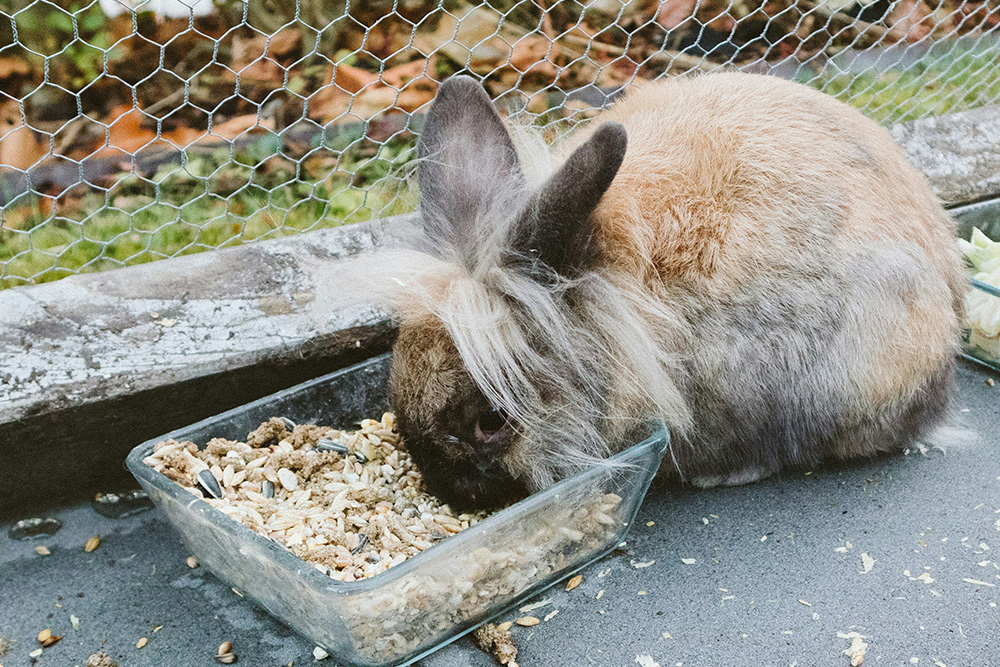
  • Feed a High-Fibre Diet: Hay should make up most of their diet to wear down their continuously growing teeth. 
  • Check for Overgrown Teeth: Misaligned or overgrown teeth require veterinary attention. 
  • Look for Drooling & Weight Loss: Early warning signs of dental problems. 
Top Tips for Keeping Your Pet’s Teeth Healthy: 

  Brush regularly with pet-safe toothpaste 
  Provide appropriate dental chews and a species-appropriate diet 
  Schedule regular dental check-ups 
  Watch for signs of dental problems like bad breath or difficulty eating

How can our practice help?

We provide comprehensive dental care for cats, dogs, and rabbits, including professional cleanings, extractions, and preventative advice. The Castle Club includes regular check-ups and dental procedure discounts to help keep your pet’s teeth in top condition.

Essential Tips for Pet Nail Clipping | How to Trim Dog & Cat Claws

Essential Tips for Pet Nail Clipping

Trimming your pet’s nails—whether it’s your dog or cat—can feel intimidating if you’re not used to it. However, regular nail trimming is crucial for your pet’s health, comfort, and even the safety of your home and furniture.

Why Regular Nail Clipping is Important for Cats and Dogs

Long nails can cause a range of problems for your cat or dog, from discomfort to health issues. Overgrown nails can curl and grow into the paw pads, leading to pain and infections. They also put unnecessary pressure on toe joints, potentially causing arthritis or other joint problems. Long nails can also scratch furniture, floors, and even injure other pets or family members. Keeping your pet’s nails trimmed will help prevent these problems and promote overall paw health.

Essential Tips for Pet Nail Clipping
How Often Should You Trim Your Pet’s Claws?

For active pets that spend a lot of time outdoors, natural surfaces like pavement and grass can help wear down their nails. However, if your pet is mostly indoors, elderly, or less mobile, you will need to trim their nails every few weeks to keep them at a healthy length.

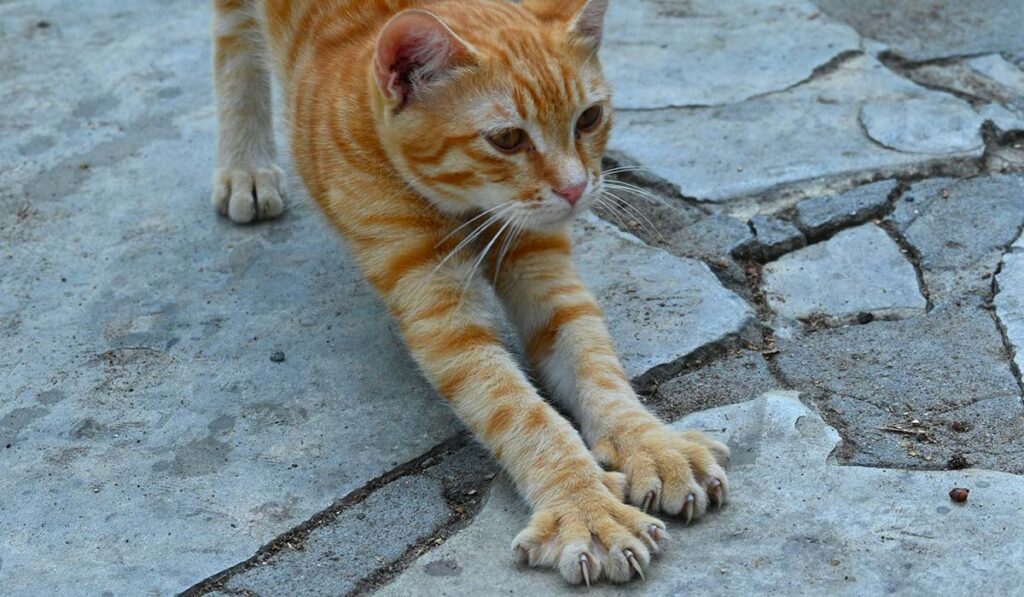
For dogs, a good rule of thumb is to listen for the sound of their nails clicking on the floor—if you hear it, it’s time for a trim. For cats, check if their claws are visible even when retracted. If so, it’s nail clipping time!

Essential Tips for Pet Nail Clipping
Essential Tools for Cat and Dog Nail Clipping
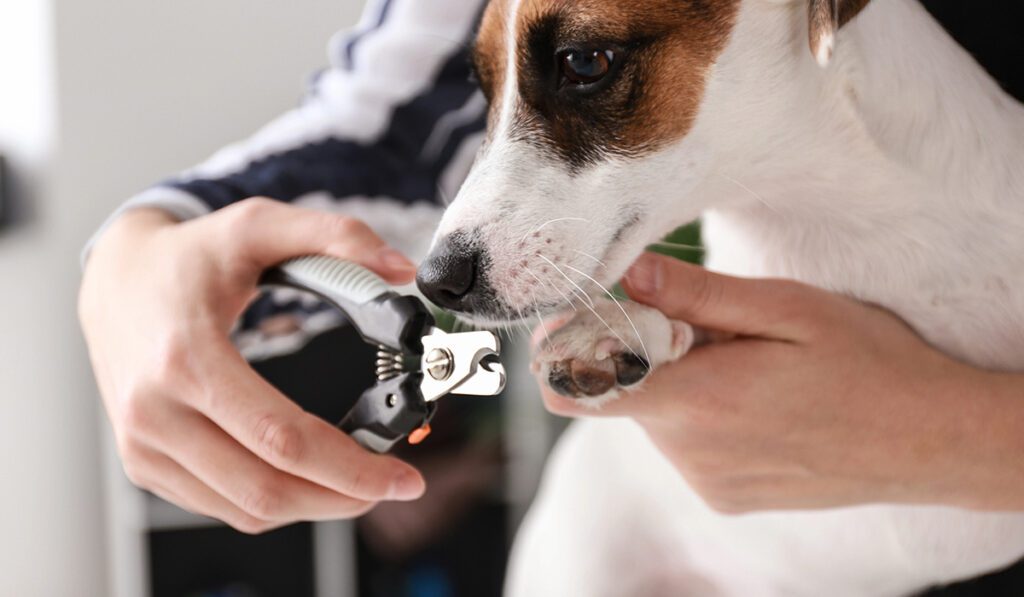
  1. Pet Nail Clippers: Choose between guillotine-style or scissor-style clippers, depending on your pet’s size. Always use sharp clippers to ensure a clean, quick cut.
  2. Styptic Powder: Accidents happen. Keep styptic powder handy in case you cut the nail too short and hit the quick—the sensitive part of the nail that contains blood vessels. This powder will help stop any bleeding.

Having a second person to help hold and calm your pet during nail trimming can make the experience smoother for both you and your pet.

Reducing Stress During Pet Nail Clipping

Both you and your pet need to stay calm during nail trimming. Start by getting your dog or cat comfortable with having their paws handled. Let them see and hear the clippers beforehand to reduce anxiety.

Reward your pet with treats throughout the process to create positive associations. Remember, it’s okay to trim just a few nails at a time if either of you becomes stressed. Patience is key to successful nail trimming.

Essential Tips for Pet Nail Clipping
Top Tips for Clipping Dog Nails
  • Position your dog on a table or in your lap so their nails are off the floor.
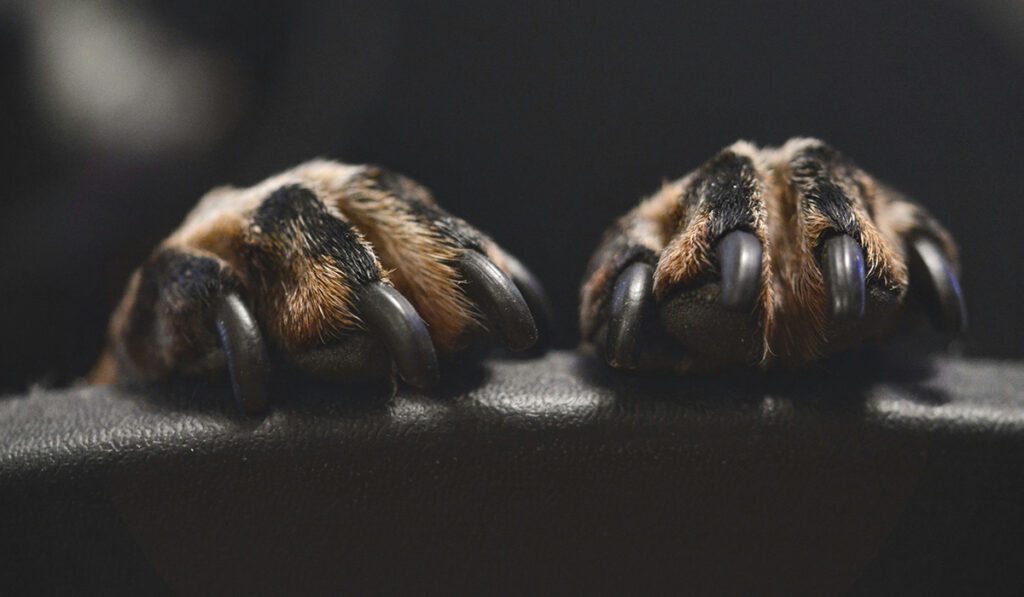
  • Cut small amounts at a time. If your dog has white nails, you can easily see the quick and avoid cutting into it. For dogs with black nails, cut very small amounts until you see a circle appear in the middle of the nail—this indicates you’re close to the quick.
  • Don’t forget to trim the dew claws, located on the upper, inner part of your dog’s paw.
Essential Tips for Pet Nail Clipping
Top Tips for Clipping Cat Nails
  • Hold your cat securely on your lap or have someone help hold them.
  • Gently press on the paw pad to extend the claws. Be mindful, as cats’ paws are very sensitive.
  • Most cats have clear claws, making it easy to see the quick and avoid it. For cats with black claws, follow the same cautious approach as with dogs.

Regularly trimming your cat’s and dog’s nails is an essential part of their grooming routine. With these tips, you can ensure a safer and more pleasant experience for both you and your pet.

Book your pet in for a nail clip

If you need to book your pet in for their nails to be clipped, or require further advice on this, please do not hesitate to contact us:

Dorchester (Poundbury) 01305 267083
Weymouth 01305 813303

Animal Health Certificates (AHCs): Pet Owner’s Guide to Taking Your Pet Abroad

Animal Health Certificate (AHC)

Traveling with pets can be a rewarding experience, but it requires careful planning and adherence to specific regulations to ensure the safety and health of your pets. One of the essential requirements for international pet travel is the Animal Health Certificate (AHC). This guide provides an overview of what you need to know about AHCs and how to prepare for taking your pet abroad. 

What is an Animal Health Certificate (AHC)? 

An Animal Health Certificate (AHC) is a document required for pets traveling internationally. It certifies that your pet meets the health and vaccination requirements of the destination country. The AHC replaces the former pet passport system and is valid for a single trip, expiring after four months of travel or once you return to your home country. 

Requirements for an AHC 

To obtain an AHC, your pet must meet the following criteria: 

  • Microchipping: Your pet must be microchipped before or at the same time as their rabies vaccination. 
  • Rabies Vaccination: Your pet must have a valid rabies vaccination administered at least 21 days before travel. The vaccination must be given after the pet is microchipped. 
  • Tapeworm Treatment: For dogs traveling to certain countries like Finland, Ireland, and Malta, tapeworm treatment is required 1-5 days before travel. 

An Animal Health Certificate (AHC) is a document required for pets traveling internationally. It certifies that your pet meets the health and vaccination requirements of the destination country. The AHC replaces the former pet passport system and is valid for a single trip, expiring after four months of travel or once you return to your home country. 

Don’t worry: This all sounds very complicated. If you’d like to travel with your pet and you need an Animal Health Certificate, just call us on 01305 267083 or email us on info@castlevets.co.uk

Animal Health Certificate (AHC)
Traveling to the EU 

When traveling to an EU country, ensure your pet: 

  • Is at least 15 weeks old. 
  • Has a microchip and a valid rabies vaccination. 
  • Receives tapeworm treatment if required. 
  • Has an AHC issued within 10 days of travel. 
  • Rabies vaccination: If an owner has a valid EU passport (not UK issued), they must have their rabies vaccination in the EU (not UK) to keep the passport valid. UK vets can still give rabies vaccinations for AHCs and Export. 
Traveling to Non-EU Countries 

For non-EU countries, you may need an Export Health Certificate (EHC) in addition to the AHC. The EHC ensures your pet meets the specific health requirements of the destination country. An export application form (EXA) may also be necessary. 

Assistance Dogs

Assistance dogs have slightly different regulations and may not need to travel via approved routes. However, it’s essential to notify authorities to ensure the appropriate checks are conducted. 

Animal Health Certificate (AHC)
Travel Tips
  • Check the specific entry requirements of the destination country well in advance. 
  • Be aware of environmental hazards, such as hot pavements and local wildlife, that may affect your pet. 
  • Research local laws regarding pet behavior and restrictions.
  • Your pet must receive preventative parasite control as there are many diseases present in Europe which we don’t have in the UK. The owner should discuss this with the practice before arranging the issue of the AHC.  
Conclusion

Ensuring your pet has the correct documentation and meets health requirements is crucial for a smooth travel experience. An Animal Health Certificate is an essential part of this process, providing proof that your pet is healthy and ready for international travel.  Ensuring your pet has the correct documentation and meets health requirements is crucial for a smooth travel experience. An Animal Health Certificate is an essential part of this process, providing proof that your pet is healthy and ready for international travel.  

Want to travel with your pet?

This all sounds very complicated. If you’d like to travel with your pet and you need an Animal Health Certificate, just call us on 01305 267083 or email us on info@castlevets.co.uk

Microchipping Cats to become Mandatory in the UK by June 2024

Microchipping Cats

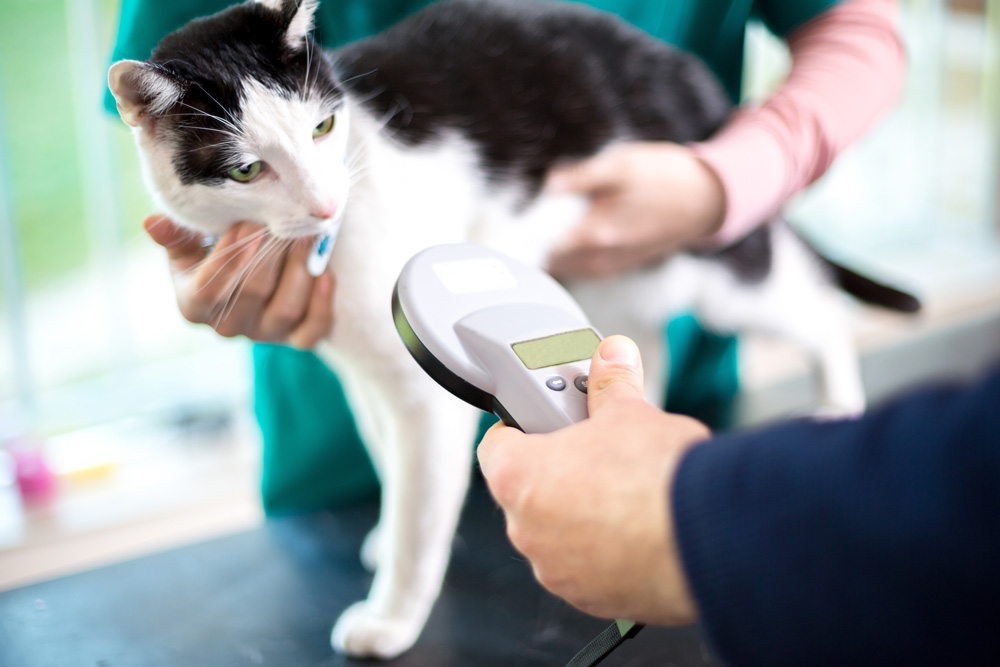
In recent years, microchipping has emerged as a revolutionary tool in the world of pet identification. In this country, we’re renowned for our lo-ve of cats, and we’ve taken a significant step forward by making microchipping compulsory for all cats from 10th June 2024. This blog explores the benefits of microchipping cats and explains why this practice has become a crucial component of responsible pet guardianship.

All owners must have their cat microchipped by 10 June 2024 and owners found not to have microchipped their cat will have 21 days to have one implanted, or may face a fine of up to £500.

...until Microchipping Becomes Compulsory in the UK

Why Microchip Your Cat?

Lost and Found: A Lifesaver for Cats

One of the most distressing experiences for any pet owner is having their beloved feline friend go missing. Traditional identification methods like collars and tags can easily be lost or removed, leaving cats without any form of identification. Microchipping offers a permanent solution by implanting a tiny electronic chip under the skin, typically between the shoulder blades. This chip contains a unique identification number that can be scanned by vet practices, animal shelters, or animal wardens. This technology has proved instrumental in reuniting countless lost cats with their worried owners, saving lives and alleviating emotional distress.

Ensuring Responsible Ownership and Reducing Stray Population

Microchipping supports responsible pet guardianship by promoting accountability. By making it compulsory, the UK government aims to reduce the number of stray and abandoned cats. Microchips provide crucial information about the cat’s guardian, allowing authorities to trace back to the responsible individual. This not only discourages negligence but also acts as a deterrent against animal cruelty and abandonment. By fostering a sense of responsibility among cat guardians, the initiative aims to create a safer and more compassionate environment for feline companions.

Medical Benefits: Tailored Care for Cats

Microchips can store vital medical information, such as vaccination records, temperature, medical conditions, and prescribed medications. This data can be accessed by vets, enabling them to provide prompt and appropriate treatment. During emergencies, when a cat’s owner might not be readily available, this information proves invaluable in delivering timely and potentially life-saving care. Additionally, microchipping aids in the prevention of fraudulent ownership claims, ensuring that cats receive the necessary medical attention from their genuine owners.

Prevention of Illegal Activities

Sadly, theft and illegal trading of pets are issues that persist today. Microchipping serves as a deterrent to potential pet thieves, as it provides an easily identifiable marker of guardianship. In the event that a stolen cat is found, scanning its microchip will reveal the true owner and help reunite them with their feline companion. Furthermore, the microchipping requirement provides law enforcement agencies with a valuable tool to tackle illicit pet trade, safeguarding the welfare of cats and curbing illegal activities.

The decision to make microchipping compulsory for cats in the UK is a progressive step towards enhancing responsible pet guardianship and safeguarding the welfare of feline companions. Microchips provide a reliable, permanent form of identification that significantly increases the chances of lost cats being reunited with their owners. Additionally, they offer medical benefits, act as a deterrent against illegal activities, and aid in population control by reducing the number of stray cats. Embracing this technology allows us to create a safer and more compassionate environment for our furry friends.

So, if you haven’t already, consider microchipping your cat today. By doing so, you contribute to the well-being of your pet and play an active role in building a more responsible and caring community of cat guardians.
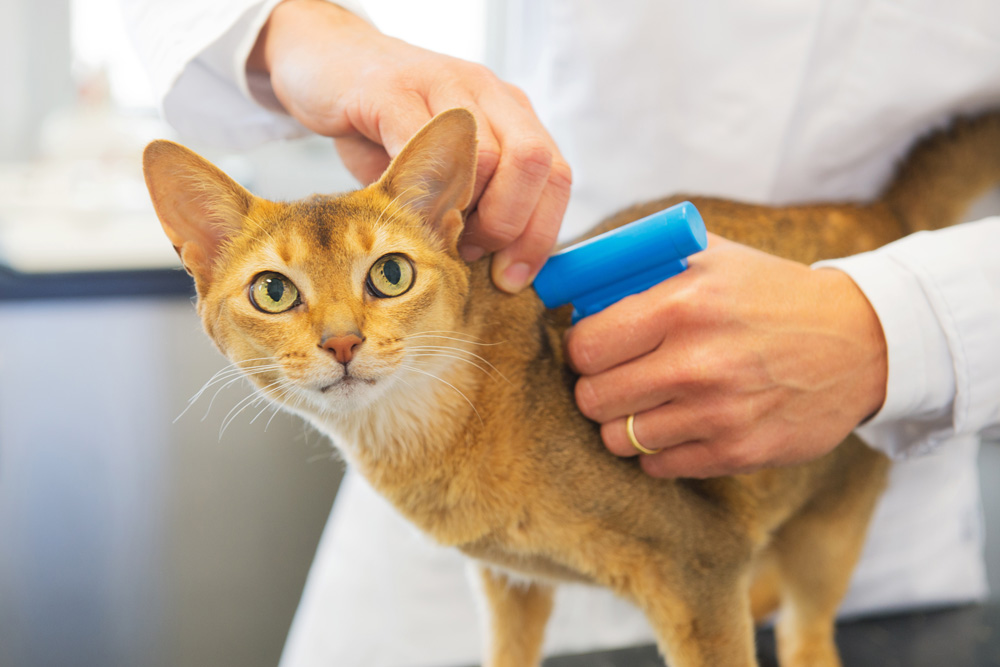
To book your cat in for a microchip, please call 01305 267083, or consider becoming a member of the The Castle Club.
The Castle Club | Pet Healthcare Plan from Castle Vets Dorchester and Weymouth

10% Discount on Cat Microchipping

Members of the Castle Club get a 10% discount on microchipping included in their plan. While also benefitting from a wide range of services such as annual vaccinations, regular health checks, year-round parasite prevention and much more. Your cat’s first month costs just £19.30, that’s cheaper than a microchip! See all the benefits and join online below: