


Christmas is one of the most magical times of year – but among the fairy lights, food and festivities are a surprising number of hazards for pets. From unsafe treats to tempting decorations, it’s important to know what could put your dog or cat at risk over the holiday season.
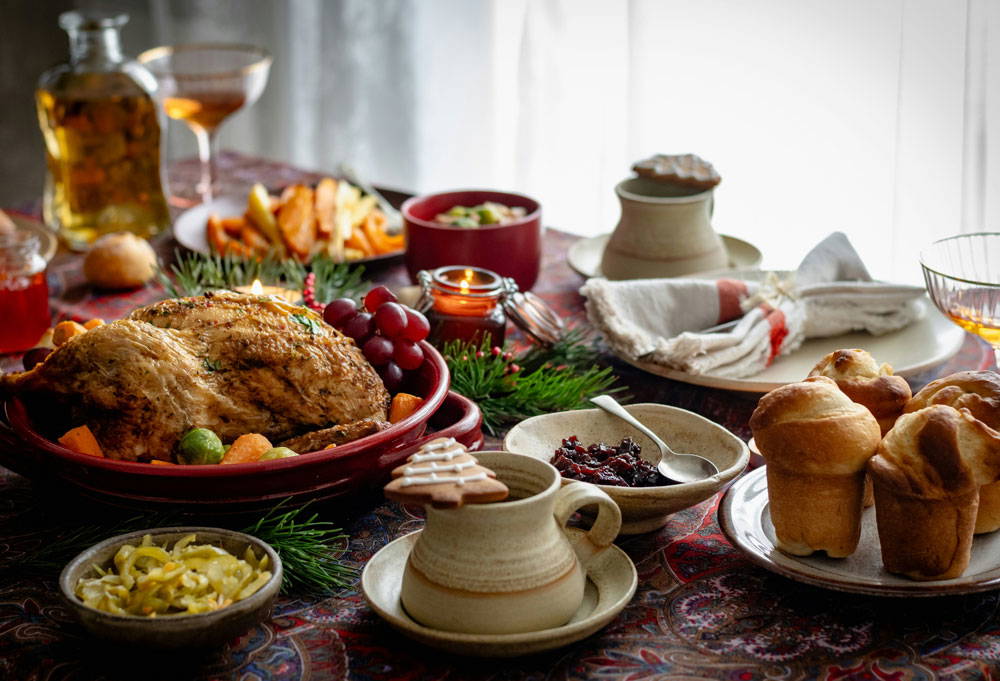
1. Beware of Toxic Christmas Foods
Dogs and cats are often tempted by festive smells, but many Christmas foods can cause serious illness. Keep these well out of reach:
- Mince pies & Christmas pudding (grapes, currants & raisins) – Even small amounts can cause kidney failure in dogs. Symptoms may not show for hours – always treat ingestion as an emergency.
- Stuffing (onions, garlic & leeks) – These common ingredients are toxic to pets and can damage red blood cells, leading to anaemia.
- Chocolate – Contains theobromine, which is poisonous to dogs and cats. Dark chocolate carries the biggest risk.
- Alcohol – Pets absorb alcohol much more quickly than humans – even small sips can cause dangerous drops in blood sugar and body temperature.
- Blue cheese – Some blue cheeses contain roquefortine C, a toxin that can cause tremors and seizures in dogs.
- Macadamia nuts – Highly toxic to dogs, causing weakness, tremors and vomiting within a few hours of eating them.
2. Keep Decorations Pet-Proof
Christmas decorations are fascinating to pets, but many come with hidden dangers. Make sure your tree and accessories are safely positioned.
- Tinsel & ribbon – If swallowed, long strands can cause serious intestinal blockages that often require surgery.
- Glass baubles – Easy to knock off and break. Shards can cut paws and mouths or cause internal injury if swallowed.
- Fairy lights – Chewing through wires can result in burns or electric shock. Always secure cables and use guards where needed.
- Snow globes – Some contain antifreeze (ethylene glycol), which is extremely toxic if ingested. Even a small spill can be dangerous.
3. Minimise Stress During Busy Gatherings
Visitors, noise, and disrupted routines can make Christmas overwhelming for pets. Small changes can help them stay calm and confident.
- Provide a quiet safe space – Set up a cosy room or corner where your pet can escape the excitement and rest undisturbed.
- Use puzzle toys or long-lasting chews – These provide mental stimulation and help distract anxious pets during busy moments.
- Keep routines consistent – Regular mealtimes and walks help pets feel secure, even when your own plans change.
- Consider pheromone diffusers – Vet-approved calming diffusers can help reduce worry in both dogs and cats throughout the holiday season.
4. Watch Out for Poisonous Christmas Plants
Many classic Christmas plants look beautiful – but they’re not pet-friendly. To keep your pet safe, avoid or place these well out of reach.
- Poinsettia – Mildly toxic but can still cause drooling, vomiting, and skin irritation.
- Holly berries – Bright and tempting to pets, but can cause vomiting and diarrhoea if eaten.
- Ivy – Can cause mouth irritation, drooling and gastrointestinal upset.
- Mistletoe – Ingesting leaves or berries can lead to vomiting, abdominal pain, and in severe cases heart issues.
- Lilies – Extremely dangerous for cats – even tiny amounts of pollen can cause fatal kidney failure.
5. Choose Safe Christmas Gifts for Pets
Spoiling pets at Christmas is part of the fun – just make sure presents are safe and suitable.
- Dental chews – Help keep teeth clean while giving pets something satisfying and safe to gnaw on.
- Tough rubber toys – Durable toys are safer for enthusiastic chewers and less likely to break into swallowable pieces.
- Snuffle mats – Great for slowing down food, encouraging natural foraging behaviour, and reducing stress.
- Licki mats – Perfect for keeping pets engaged with soft foods or treats; can also help calm anxious dogs.
6. Be Prepared for Emergencies
Christmas schedules can be unpredictable, so it’s helpful to plan ahead in case your pet needs veterinary care.
Practice holiday opening hours – Check these in advance so you know when routine appointments are available.
Out-of-hours provider details – Keep contact details somewhere visible in case you need urgent help over bank holidays.
Emergency clinic location – Know where to go before you need it – travelling in an emergency is far easier when you’re prepared. Learn more about our emergency vet care at Castle Vets here.